
Dome Camera Guide 2026: Complete Dome vs Turret Buyer Manual
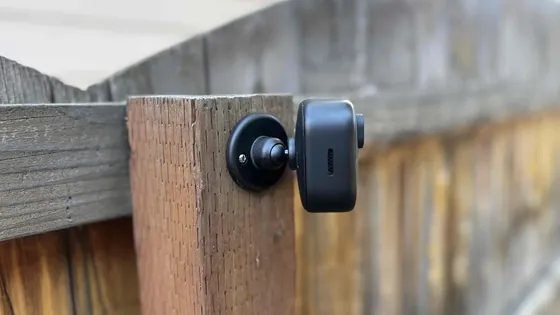
Table of Contents
Most "turret camera vs dome" searches end with buyers picking by price and discovering the mistake weeks later: the dome's ceiling mount points the lens into a shelf, or the turret's exposed lens housing gets smashed within a month in a corridor with rough traffic. The two families solve different problems. A vandal dome with an IK10-rated housing absorbs a 20-joule impact — roughly a 5 kg weight dropped from 40 cm — without losing a single frame, while a standard plastic bubble cracks at a fraction of that energy. Choosing wrong means replacing cameras, re-running cable, or discovering your till footage is unusable at the moment an insurance claim depends on it.
This guide walks through what a dome camera actually is, the full dome vs turret comparison with a spec table, the three dome families (fixed, vandal, speed dome), how IK10 vandal-proof design works, night vision and lens math, where commercial dome cameras earn their keep in retail, office and hotel settings, installation rules that fix the common blind-spot mistakes, realistic dome camera price bands, and how to buy wholesale from dome camera suppliers without paying retail markup. By the end you will be able to spec a dome camera system from a supplier quote with confidence.
Keep reading for more!
The Snapshot
- A dome camera is a fixed or motorized camera housed inside a hemispherical bubble — the housing hides the lens direction, deters tampering and mounts flush on ceilings; three families exist: fixed dome, vandal dome (IK10) and speed dome (PTZ).
- In the "turret camera vs dome" debate: turrets cost less and deliver slightly better IR night vision and easier lens access; domes win on vandal resistance, discretion and ceiling flush mounting — the reason commercial indoor sites overwhelmingly choose domes.
- Vandal ratings matter: IK08 resists 5 J of impact, IK09 resists 10 J, IK10 resists 20 J — with a 3-4 mm polycarbonate bubble and aluminum alloy housing; IP66 is a separate water/dust rating, not an impact rating.
- Lens math on a 1/2.7" sensor: 2.8 mm gives roughly 100-110° field of view and face identification to ~5 m; 6 mm narrows to ~50° for ~15 m; 12 mm reaches ~25-30° for identification at 30-40 m.
- Realistic dome camera price bands: 2MP fixed dome $12-25, 4MP $18-35, 5MP full-color $28-55, IK10 vandal dome $35-70, 20x speed dome $180-450 at retail — factory-direct wholesale runs 30-50% lower at volume.
What Is a Dome Camera?
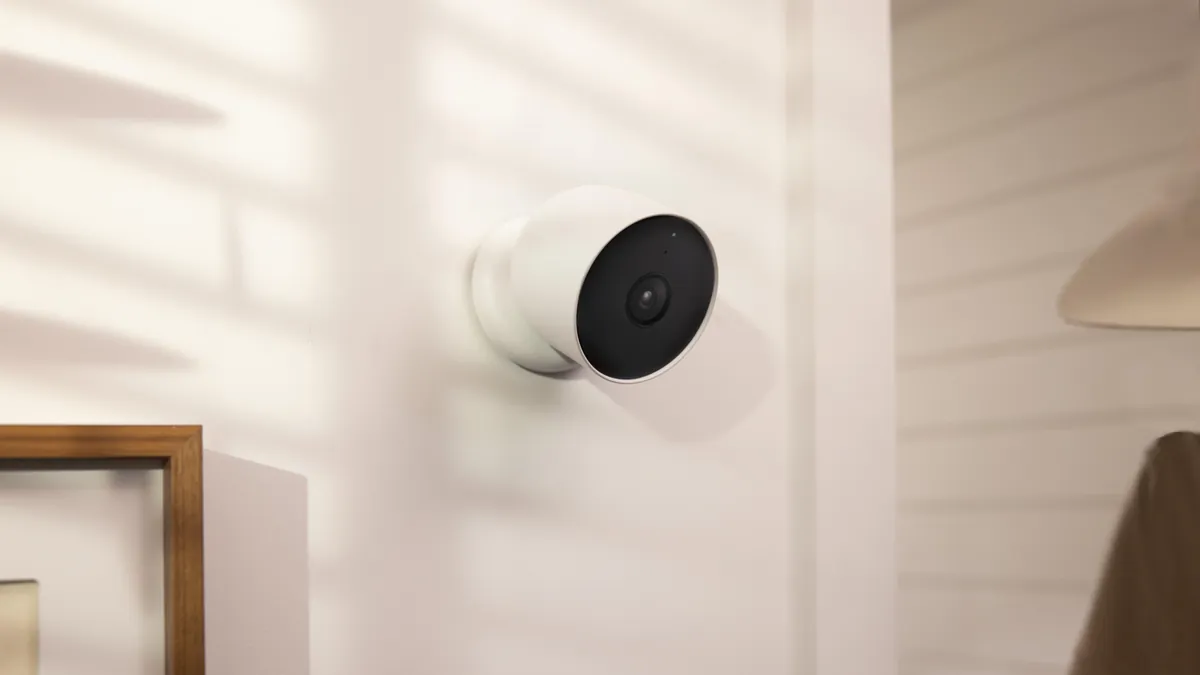
A dome camera is a surveillance camera enclosed in a hemispherical housing — a bubble of clear polycarbonate or glass sitting over the lens module, usually mounted flush against a ceiling or wall. The "dome" in "dome camera" is the housing, not the lens: behind the bubble sits a standard fixed lens (or a motorized PTZ mechanism in speed dome models) with a 3-axis gimbal that lets the installer aim it in any direction. The classic "dome camera" search is almost always a commercial buyer — shop owner, office manager, hotel operator — looking for discreet indoor coverage, and the "dome cctv camera" and "dome security camera" searches point at the same product family.
Why the dome shape? Three practical reasons. First, the housing hides the lens direction: a visitor cannot tell where the camera is pointing, so they cannot walk in its blind spot. Second, the bubble protects the lens from dust, moisture and deliberate interference — this is the seed of the vandal dome. Third, the round footprint mounts flush on ceilings and looks intentional in customer-facing spaces, which is why retail, office and hotel specifiers treat the "indoor dome camera" as the default indoor form factor.
Dome cameras are not inherently outdoor devices — most fixed domes carry an IP20 or IP40 rating for indoor use only. Outdoor dome cameras exist with IP66 housings and heater/blower options for extreme temperatures, but the honest division of labor on most commercial sites is: domes indoors, turrets and bullets outdoors. That division is exactly what the "turret camera vs dome" comparison is really about, and it is covered in detail next.
Dome vs Turret Camera: The Full Comparison
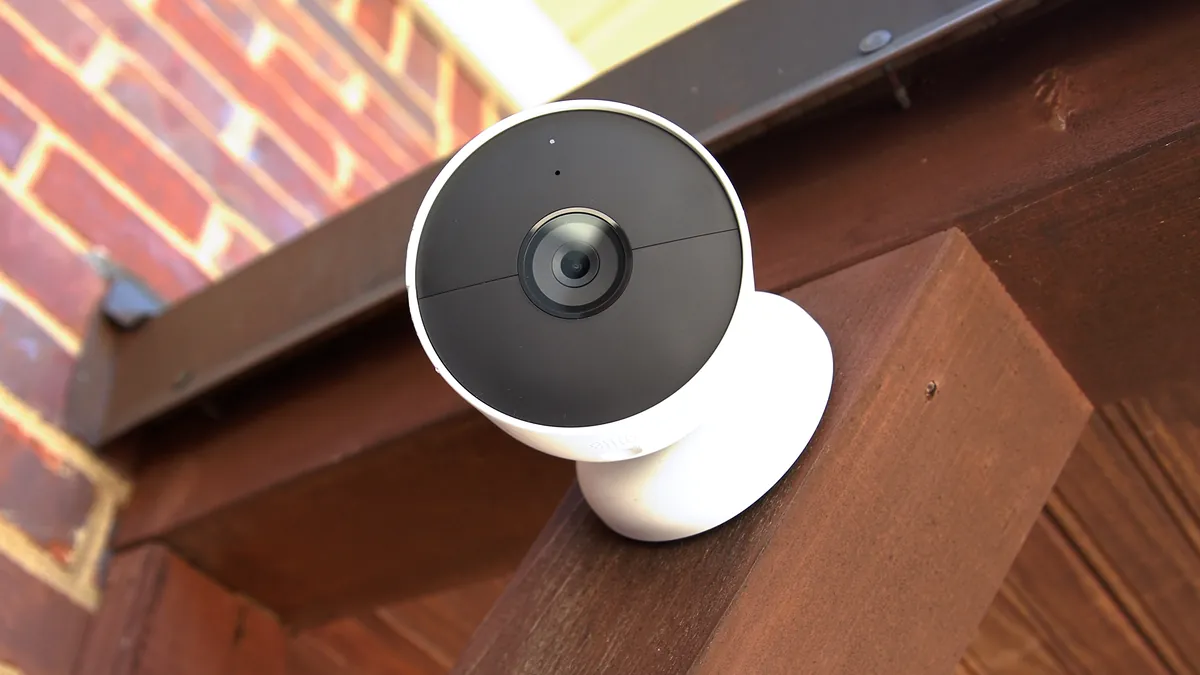
The "turret camera vs dome" question is the most searched comparison in the commercial camera space, and the answer is not "one is better" — it is "they are built for different mounting surfaces and threat levels." A turret camera (also called an eyeball camera) carries the lens module on a short exposed arm with the lens surface open to the air, covered only by a small glass window or nothing at all. A "turret ip camera" is cheaper to build, easier to aim, and — because there is no bubble in front of the lens — has cleaner IR performance at night. A dome, by contrast, accepts slightly worse IR optics in exchange for impact resistance, discretion and flush ceiling mounting.
| Factor | Dome Camera | Turret Camera |
|---|---|---|
| Form factor | Lens behind a bubble, flush ceiling mount | Exposed lens arm, wall or eave mount |
| Lens protection | Polycarbonate bubble shields the lens | Open lens; rain hood on some models |
| Vandal resistance | IK08-IK10 available (20 J impact) | Low — housing is the weak point |
| Discretion | Hides lens direction; looks neutral indoors | Clearly visible camera — a stronger deterrent, less subtle |
| Night vision (IR) | Bubble can reflect IR — needs quality optics | Cleaner IR, no bubble reflection, longer usable range |
| Field of view | Same lens = same FOV; mount angle limited by ceiling | Same lens = same FOV; arm allows steep angles |
| Installation | Ceiling flush or pendant; 3-axis gimbal inside | Wall/eave surface mount; aim by hand |
| Cost (same sensor) | Slightly higher (bubble + housing) | Lower — minimal housing parts |
| Best for | Retail, office, hotel, corridors, vandal-prone zones | Outdoor perimeter, yards, parking, eaves |
1. Where the dome wins
Vandal resistance, discretion and ceiling fit. A "vandal dome camera" with an IK10 housing survives deliberate hits that would destroy a turret's lens. Because the bubble hides the lens, subjects cannot dodge the coverage. And in a retail or office ceiling grid, the round dome sits flush where a turret arm would protrude into the aisle.
2. Where the turret wins
Price, night vision and outdoor durability. A "turret camera manufacturer" builds the same sensor into a cheaper body, and without a bubble the IR LEDs throw farther at night. If the site is outdoor perimeter with no vandalism risk, the turret is the rational buy — which is why a "turret camera vs dome" decision on an outdoor run usually lands on the turret.
3. The split-deployment standard
The professional pattern is mixed: domes at tills, lobbies and corridors (vandal-prone, customer-facing), turrets or bullets on the exterior perimeter. Both families are usually ONVIF-compliant and record onto the same NVR, so mixing costs nothing in software — it just means buying from suppliers who offer both lines.
Dome Camera Types: Fixed, Vandal and Speed Dome
"Dome camera" is a family name, and picking the wrong member of the family is a common budget error. There are three practical types, plus a specialty fourth. The "dome camera types" question maps directly to where the camera mounts and what it must survive.
1. Fixed dome camera
The workhorse indoor camera: a fixed lens (2.8 mm, 3.6 mm, 6 mm or 12 mm), 2MP to 5MP sensor, IR or full-color night vision, ceiling flush mount. The "indoor dome camera" class lives here. Prices start around $12 retail, and it covers shops, offices, corridors and lobbies — anywhere the camera does not need to move or survive violence.
2. Vandal dome camera
A fixed dome with a hardened body: aluminum alloy housing, 3-4 mm polycarbonate bubble, IK08-IK10 impact rating, tamper alarm, and often an IP66 rating that makes it outdoor-capable. The "vandal dome camera" and "vandal proof dome camera" searches are schools, prisons, transit, stairwells and public lobbies — sites where cameras get hit, thrown at or sprayed. This type is detailed in the next section.
3. Speed dome camera
A motorized PTZ mechanism inside a dome: 360° continuous pan, 0-90°+ tilt, 20x to 30x optical zoom, preset positions and auto-tracking. A "speed dome camera" with 2MP and 20x zoom covers a hotel lobby or warehouse floor from one ceiling point, and "2mp 20x speed dome camera" is the exact spec most integrators quote. Speed domes are the most expensive dome type — $180-450 at retail for 20x models, more for 30x with auto-tracking.
4. Fisheye / panoramic dome
A single camera with a 180° or 360° lens that replaces several fixed domes; the software dewarpes the image into normal views. The "dome camera 360" searches belong here. Fisheye domes cut hardware count in open spaces but need a VMS with dewarping and are weaker on identification distance than a 12 mm fixed dome.
| Dome type | Typical resolution | Housing | Best for | Retail price |
|---|---|---|---|---|
| Fixed dome | 2MP-5MP | Plastic, IP20-IP40 | Shops, offices, corridors | $12-55 |
| Vandal dome | 2MP-5MP | Aluminum + polycarbonate, IK10, IP66 | Schools, transit, public zones | $35-70 |
| Speed dome | 2MP-4MP | Metal, IK10 option | Lobbies, warehouses, malls | $180-450+ |
| Fisheye dome | 4MP-12MP | Plastic or metal | Open spaces, one-camera rooms | $80-250 |
Vandal-Proof Design: IK10 Housing Explained
The "vandal dome camera" exists because standard plastic domes fail the one job a corridor camera must do: keep recording when someone hits it. Vandal-proof design is a stack of engineering decisions, and the rating to look for is the IK code.
1. What IK10 actually means
IK is the international impact-resistance rating (IEC 62262). IK08 resists 5 joules, IK09 resists 10 joules, and IK10 resists 20 joules of impact energy — the highest standard rating. Physically, 20 J is roughly a 5 kg weight dropped from 40 cm, or a solid punch delivered with a heavy object. An IK10 vandal dome is expected to keep its lens aligned and its image usable after that hit. For comparison, a normal indoor fixed dome carries no IK rating at all and cracks under a fraction of that force.
2. How it is built
Three parts matter. The housing is die-cast aluminum alloy rather than plastic — stiff, and it spreads impact instead of shattering. The bubble is 3-4 mm clear polycarbonate (the same material as riot shields) with an anti-scratch hard coating, because a scratched bubble degrades image quality even when it does not break. And the mounting is tamper-proof: hidden or security screws, a recessed bracket, plus a tamper switch that fires an alarm the moment the housing is opened. A true "vandal proof dome camera" also seals the bubble-to-housing joint so sprayed liquids cannot creep in.
3. IK vs IP — do not confuse them
IP66 is a water and dust rating (dust-tight, protected against powerful water jets); IK10 is an impact rating. A camera can be IP66 and flimsy, or IK10 and not weather-sealed. For outdoor vandal zones — parking structures, building exteriors, transit stops — spec the combination: IK10 + IP66. For indoor corridors, IK10 alone is usually enough.
4. Where vandal domes are mandatory
Schools and universities, prisons and detention, transit stations, stairwells, elevators, public housing lobbies, convenience stores with 24-hour operation. The failure mode is not always malice — cleaning crews and carts hit low-mounted cameras constantly. The rule of thumb: if the camera is within arm's reach (under ~3 m) in a public area, buy the vandal dome; if it is on a high ceiling or exterior eave, a standard dome or turret is defensible.
Night Vision and Image Quality
The "dome camera night vision" question has two answers, and they are not marketing variations — they are different hardware. IR dome cameras switch to monochrome at night and illuminate the scene with 850 nm IR LEDs; full-color dome cameras keep color 24/7 using a large-aperture lens (F1.0-F1.6) and a warm fill light that doubles as a visible deterrent.
1. The numbers that matter
Minimum illumination is the headline spec: a good full-color dome is rated 0.1 lux color at F1.0 and 0 lux with the fill light on; an IR dome is typically 0 lux with IR on and reaches 20-30 m of IR range on indoor scenes. Sensor size beats megapixels for night quality — a 5MP camera on a 1/2.7" large-format sensor collects more light per pixel than a 5MP camera squeezed onto a smaller sensor. The FULLCOLORCAM 5MP full-color dome is built on exactly this formula: 1/2.7" sensor, F1.0 aperture, 0.1 lux color minimum, H.265+ compression for ~50% storage savings.
2. The dome-specific IR problem
A bubble in front of the lens reflects IR light back into the sensor, producing the classic "dome halo" — a washed-out center at night. Quality domes solve this with IR-optimized bubble material and LED placement, and this is the single biggest quality gap between cheap and serious dome cameras. A $15 dome and a $45 dome with the same sensor can differ enormously at night because of bubble optics. If night coverage matters, ask the supplier for a night sample clip before committing.
3. WDR and backlight
Entrances are the hard case: bright daylight outside, dark interior. Wide dynamic range (WDR, typically 120 dB on commercial domes) pulls detail from both shadows and highlights in the same frame. Without it, faces at the door blow out to silhouettes. Pair WDR with the mounting-height rules later in this guide and the entry footage becomes usable evidence.
4. Audio as a bonus
Many commercial domes include a built-in microphone and speaker (G.711 two-way audio), letting a remote operator talk through the camera — useful at service counters, reception desks and hotel entrances. Check whether the dome you are comparing has audio at all; it is often the difference between two similarly priced models.
Lenses, Field of View and Mounting Height
Every "dome camera" spec sheet ends with a lens row, and most buyers ignore it — then wonder why the camera sees the ceiling and not the till. The "dome camera lens" choice decides what the camera can actually do, and the mounting height decides whether the lens can point at anything useful.
1. Fixed focal lengths and what they see
Fixed domes ship with 2.8 mm, 3.6 mm, 6 mm or 12 mm lenses. On a 1/2.7" sensor, the horizontal field of view runs roughly: 2.8 mm ≈ 100-110°, 3.6 mm ≈ 80-90°, 6 mm ≈ 50-55°, 12 mm ≈ 25-30°. Wider is not automatically better: identification distance scales with focal length. A 2.8 mm dome identifies a face at ~5 m; a 6 mm reaches ~15 m; a 12 mm reaches ~30-40 m. The "ip camera dome sony 12mm" search — a fixed dome with a Sony sensor and a 12 mm tele lens — is exactly the corridor or till configuration: narrow view, long identification range.
| Lens (1/2.7" sensor) | Field of view | Face ID distance | Typical use |
|---|---|---|---|
| 2.8 mm | ~100-110° | ~5 m | Rooms, open office, ceiling coverage |
| 3.6 mm | ~80-90° | ~8 m | Shop floor, lobby, corridor width |
| 6 mm | ~50-55° | ~15 m | Aisles, checkouts, reception desk |
| 12 mm | ~25-30° | ~30-40 m | Long corridors, gates, tills at distance |
2. Motorized varifocal domes
A motorized varifocal dome ("ip dome camera auto focus") adjusts focal length remotely from 2.8-12 mm, so the installer dials the exact FOV from the NVR or app after mounting — no ladder, no re-aim. It costs $10-20 more than a fixed lens and pays for itself whenever the mount point or coverage area changes. For multi-site rollouts, standardize on one varifocal range (e.g. 2.8-12 mm) so every camera is field-tunable.
3. Mounting height and the blind spot
Height sets the trade-off between coverage area and identification quality. Mount at 2.5-3 m for indoor face identification, tilted 15-25° below horizontal. Above 3.5 m the blind spot directly under the camera grows, and faces start to compress into the top of the frame; below 2.5 m the camera is reachable, and in public areas you are buying a vandal dome for nothing. For overhead general coverage (not ID), 3-4 m is fine. In ceiling grids, flush mount the dome; on concrete ceilings use a pendant or surface box.
Commercial Indoor Applications: Retail, Office and Hotel
The "commercial dome camera" is the default indoor camera of the security industry for a simple reason: it is the only form factor that disappears into a ceiling while still surviving the environment it monitors. Here is how the three biggest commercial segments actually deploy them.
1. Retail and convenience stores
Domes go at the till (continuous recording, 3.6-6 mm for a tight register view), at the entrance (2.8 mm + WDR to handle the daylight transition), and along aisles (2.8 mm for coverage, motion-triggered recording to cut storage). Loss prevention is the economics driver: the US retail shrinkage rate sits around 1.4-1.6% of sales, and a single clear till video is the difference between a recovered claim and a write-off. Ceiling flush domes do not interrupt merchandising or customer flow, and the hidden lens direction means shoppers cannot time their movements to the camera. Two-way audio domes double as intercoms at service counters and after-hours entry points.
2. Offices and corporate buildings
Lobbies, corridors, stairwells, server rooms and open-plan floors all take the "indoor dome security camera" class. In customer-facing lobbies the camera's look matters — a flush white dome reads as professional where a bullet camera reads as fortress. NDAA-compliant domes are increasingly required for government-adjacent and large enterprise projects; check the compliance status of any dome in a corporate tender. Privacy masking covers windows and neighbor property, and corridor mode (a 90° rotated, tall-aspect view) gets more usable floor coverage out of a 2.8 mm lens than a landscape view.
3. Hotels and hospitality
Lobby and reception get a speed dome or a fixed dome on a pendant mount for overview coverage, corridors get fixed domes every 15-20 m, and the entrance gets a 2.8 mm WDR dome. Guests never want to feel surveilled — the dome's neutral look is the whole point. Speed domes earn their price here: one 20x unit at the lobby ceiling can track a check-in dispute or a luggage theft across the whole space from presets, instead of six fixed cameras.
4. Beyond the big three
Schools (vandal domes in corridors and stairwells), restaurants (till and dining area, discreet ceiling mounts), pharmacies and banks (vandal domes at counters), warehouses (fixed domes over packing stations, speed domes over racking aisles). The pattern holds everywhere: customer-facing and vandal-prone indoor zones = dome; perimeter and outdoor = turret or bullet.
Dome Camera Installation and Placement
The "dome camera installation" process is straightforward, but the placement rules are where systems succeed or fail. Installers who rush the aim step create the two classic failures: cameras pointed at shelves instead of aisles, and ceilings so high that faces are unidentifiable.
1. Mounting options
Dome cameras mount three ways. Ceiling flush — the dome sits in or on the ceiling grid, standard for retail and office drop ceilings. Pendant — a pipe drops the dome below a concrete or high ceiling, giving a lower, better angle for ID. Wall mount — a bracket angles the dome down a corridor, useful where ceiling mounting is impossible. "Dome camera mounting" decisions should be made before cable is pulled: flush needs a ceiling cavity or surface box, pendant needs the pipe and conduit planned, and each changes the cable run length.
2. Cable and power math
Commercial domes are PoE (IEEE 802.3af/at) or DC 12V. PoE is the standard for new builds — one Ethernet cable carries power and data, and a PoE switch or PoE NVR powers everything. Budget the watts: a 5MP dome with IR and audio draws roughly 8-12 W. Sixteen domes at 12 W = 192 W, which means a 24-port PoE switch with a 250 W+ budget (or a PoE NVR with the same headroom), keeping 20% reserve. On retrofit sites without Ethernet, DC 12V-2A power runs work but double the labor.
3. Aim, then lock
Adjust the 3-axis gimbal so the lens sits level, points at the coverage zone, and does not see its own mounting box. Then set the lens, enable corridor mode where applicable, and draw motion zones that exclude windows, moving displays and high-traffic background. Finally, walk the site at night: confirm faces are identifiable, IR is not haloing off the bubble, and WDR handles the entrance light.
4. Common placement mistakes
Mounting directly above a bright light or window (backlight washout), mounting at 4 m+ where faces compress, covering a corner with one wide dome instead of two narrow ones, and forgetting that a ceiling flush dome sees down, not out — a dome at a reception desk often needs a pendant or wall bracket to see the visitor's face at all.
Dome Camera Price: What You Actually Pay
The "dome camera price" question deserves a straight answer, because the range is enormous — $8 to $500 — and the price tells you exactly what is inside. Here is the real price structure, and the honest "dome camera cost" per type.
| Dome class | Typical retail price | Factory-direct wholesale (50+ pcs) |
|---|---|---|
| 2MP fixed dome, fixed lens | $12-25 | $6-12 |
| 4MP fixed dome, 2.8-12 mm varifocal | $18-35 | $10-18 |
| 5MP full-color dome (F1.0, audio) | $28-55 | $16-30 |
| IK10 vandal dome (4MP-5MP) | $35-70 | $20-40 |
| 20x speed dome, 2MP, auto-tracking | $180-450 | $110-260 |
1. What moves the price
Five components, in order of impact: sensor (2MP vs 4MP vs 5MP full-color), housing (plastic vs aluminum IK10), lens (fixed vs motorized varifocal), audio (mic + speaker adds real cost), and night-vision hardware (IR LEDs vs F1.0 aperture + fill light). A "5mp dome camera" with a plastic housing and no audio should cost less than a 4MP vandal dome — if it does not, you are paying for marketing, not hardware.
2. The $8 dome trap
Rock-bottom domes usually lie in three places: the "5MP" is interpolated from a 2MP sensor, the sensor has no low-light quality, and the bubble causes IR haloing that ruins night footage. The classic outcome is footage that is unusable as evidence — at any price. The cost floor for a dome that produces real evidence is roughly the $15-20 retail mark for 2MP, or $6-10 factory-direct in volume.
3. Total installed cost, not unit cost
Budget the full channel: camera + mount + cable + PoE port + installation labor. A $20 dome on a $40/hour install with $15 of cable and a $8 PoE port costs ~$90-100 per channel to deploy. At 16 channels that is the real project number — which is why wholesale buyers focus on unit price, and why integrators buy domes factory-direct.
Dome Camera Suppliers: Factory-Direct Wholesale Buying
The "dome camera suppliers" and "dome camera supplier" searches are B2B buyers asking one question: how do I buy domes without the retail markup? There are three sourcing paths, and the economics decide which one you need.
1. Three sourcing paths
Retail and marketplace (fastest, highest price — the $12-25 domes above, per unit). Distributors (regional stock, 10-20% below retail, minimum orders around 10-20 units). Factory-direct manufacturers (30-50% below retail at volume, private label available, MOQ typically 50-100 units). The "dome camera wholesale" buyers land at path three: same hardware, your brand or theirs, shipped in a container or consolidated air freight — and the "dome camera factory" direct path is how resellers and integrators build their margin.
2. What to ask a dome camera supplier
- True sensor spec: sensor model and size (e.g. 1/2.7"), native resolution, not interpolated megapixels
- Night sample clip: the dome's bubble optics only prove themselves at night
- IK rating and housing material (aluminum alloy vs plastic) for vandal models
- IP rating and operating temperature (-20°C to +55°C is the typical commercial range)
- ONVIF profile (S/T), GB28181 and RTSP support for third-party NVR and VMS integration
- P2P remote access model — free app, no per-camera subscription
- MOQ, lead time (15-30 days is typical factory-direct), warranty (2 years baseline) and RMA terms
- Private label: custom OSD, housing color, packaging and firmware branding
3. The mixed-fleet rule
Buy the whole camera family from one manufacturer. A site needs domes indoors and turrets or bullets outdoors — and the "turret camera manufacturer" is usually the same factory that builds the domes, often on the same sensor platform. Standardizing on one vendor's domes, turrets and NVRs means one app, one ONVIF profile set, one firmware update channel and one RMA contact. The "kit nvr 8 camera dome" bundles — eight domes plus an 8-channel NVR in one SKU — exist precisely for this: a complete standard deployable system from a single supplier.
4. The wholesale checklist
Ask for a per-unit price ladder (50/100/500 pcs), a written spec sheet with sensor model, a night demo video, certification copies (CE, FCC, RoHS, NDAA compliance statement) and the RMA flow before you place the first order. Factory-direct is cheaper for a reason — you are the support team — so the supplier's documentation quality is your documentation quality.
Dome Camera Questions Buyers Ask
1. Is a dome camera better than a turret?
It depends on the mount and the threat. Indoors, customer-facing, vandal-prone: dome. Outdoor perimeter, IR range, budget: turret. The "turret camera vs dome" table above is the decision tool — match the camera to the surface and the risk, not to brand fashion.
2. What does IK10 mean on a dome?
IK10 is the IEC 62262 impact rating: the housing resists 20 joules of impact — a 5 kg weight dropped from 40 cm — and keeps recording. IK08 is 5 J, IK09 is 10 J. For any dome within arm's reach in a public area, buy IK10.
3. Do dome cameras work at night?
Yes, in two ways: IR domes switch to monochrome and illuminate with 850 nm LEDs (20-30 m indoor range), and full-color domes keep color 24/7 with an F1.0 aperture and warm fill light (0.1 lux color minimum). Watch for bubble IR haloing on cheap domes — ask for a night clip.
4. Can I view dome cameras remotely without a subscription?
With a P2P-based dome, yes. The "dome onvif xmeye" searches cover exactly this: ONVIF compliance for NVR/VMS integration plus the XMEye-style P2P app for free remote viewing — scan the QR code, watch from anywhere, no port forwarding, no monthly fee. For multi-camera sites the same domes record on an ONVIF NVR with free app access.
5. Can one dome camera cover a whole room?
Three ways: a 2.8 mm fixed dome covers a room's general area (with a blind spot directly beneath), a fisheye dome covers 360° in one image (the "dome camera 360" answer), or a speed dome patrols presets. For identification, no single camera beats two narrow-lens cameras aimed at the two ends of the room.
6. How many dome cameras does my shop need?
The minimum viable layout is three: entrance, till, and stock/back room. A small shop with a walk-in floor adds one or two aisle domes — typically a 4-channel system. A mid-size retail store runs 8-16: entrance, tills, aisles, cash office, stock room. The "4ch onvif ip surveillance dome" kit searches are small shops starting exactly here: four ONVIF domes and a 4-channel recorder.
7. What is an "outdoor waterproof smart wifi camera mini ptz dome machine"?
That long-tail search strings five features into one product description: outdoor-rated (IP66+), waterproof, WiFi-connected, mini form factor, and PTZ movement inside a dome housing — a wireless mini speed dome. It is a real niche product class, and the lesson applies broadly: decode every feature in the search before buying, because the housing and the network interface matter as much as the resolution.
8. Do dome cameras work with my existing NVR?
If the dome is ONVIF-compliant (Profile S for streaming, Profile T for the newer motion/audio profiles), it records on any ONVIF NVR regardless of brand. Confirm the profile in the spec sheet, and for mixed fleets buy the "kit nvr 8 camera dome" style bundles where camera and recorder come pre-matched.
Buying Guide & Checklist
Use this checklist when comparing dome camera quotes from suppliers or distributors. It covers the decisions that decide whether the system produces evidence or just footage. Compare against the concrete dome camera range.
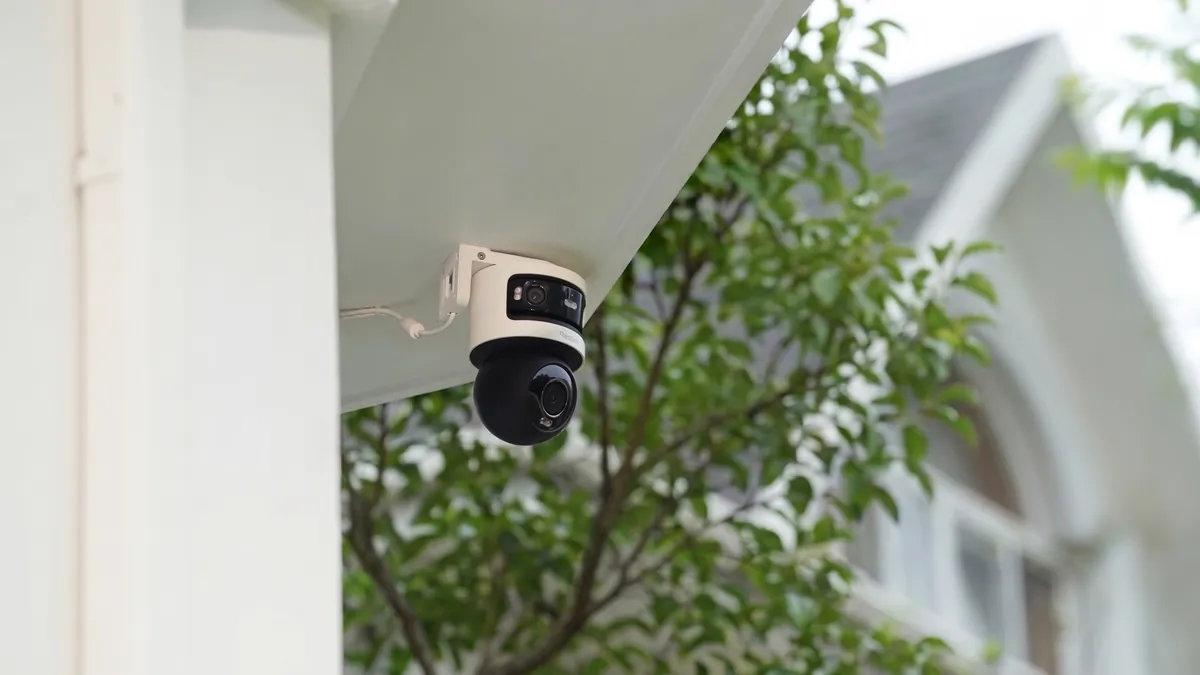
- Form factor match: dome for indoor/vandal-prone, turret or bullet for outdoor perimeter — mixed fleets are standard, buy both from one supplier
- Sensor: native resolution (2MP/4MP/5MP) on a large-format sensor (1/2.7"), not interpolated
- Night vision: IR range (20-30 m) or full-color (0.1 lux @ F1.0); request a night sample clip to check bubble haloing
- Housing: IK10 (20 J) for reachable public mounts, IP66 if outdoor; aluminum alloy + 3-4 mm polycarbonate for vandal models
- Lens: fixed 2.8/3.6/6/12 mm vs motorized varifocal 2.8-12 mm; match focal length to identification distance
- Mounting: ceiling flush, pendant or wall; mount at 2.5-3 m, tilt 15-25° for face ID
- WDR: 120 dB for entrance and window backlight scenes
- Integration: ONVIF Profile S/T, GB28181, RTSP; free P2P remote app with no subscription
- Audio: built-in mic + speaker (G.711) for two-way intercom where needed
- Codec: H.265+ for ~50% storage savings vs H.264
- Power: PoE (802.3af/at) or DC 12V; budget 8-12 W per dome with 20% switch headroom
- Supply: MOQ, lead time (15-30 days), 2-year warranty, RMA flow, CE/FCC/RoHS/NDAA documentation
The Bottom Line
A dome camera is the right answer to a specific question: do I need discreet, tamper-resistant indoor coverage that disappears into the ceiling? If yes — retail tills and aisles, office lobbies, hotel corridors, school stairwells — the dome family, and especially the IK10 vandal dome, is the rational buy. If the site is outdoor perimeter with no vandalism risk, the turret wins on price and IR reach; the "turret camera vs dome" decision is about the mounting surface and the threat, not about brand fashion. Spec the sensor and lens for the identification distance you actually need (2.8 mm for rooms, 6 mm for checkouts, 12 mm for long corridors), mount at 2.5-3 m, demand a night clip before you commit, and buy factory-direct from a dome camera supplier who can also supply the turrets and the NVR. Do that, and the domes on your ceiling will still be producing evidence years after the $8 alternatives have been replaced twice.
NEXT STEP
Ready to Upgrade to Full-Color Night Vision?
Send us your requirements — our team responds within 24 hours with pricing and lead time.
Written by
Ray ChanCCTV Buyer's Guide Author · Full-Color Night Vision Specialist. Ray helps global importers and integrators source factory-direct security cameras.