
ANPR Camera Guide 2026: The Complete License Plate Recognition Buyer Manual
Table of Contents
Most "license plate reader camera" projects fail before the recognition software is ever installed. The usual causes: a wrong mounting angle, a shutter too slow to freeze a passing vehicle, or IR washout on the plate. The geometry explains why. A car at 50 km/h covers about 14 meters per second. If the plate is only readable within 8 meters of the camera, the usable capture window is roughly one second. Miss the angle or slow the shutter, and read rates drop from above 95% on clean plates to below 70% in the field (typical). The camera, not the OCR engine, decides whether your ANPR system ever works.
This guide is the complete ANPR and LPR camera manual. It covers what an ANPR camera actually is, how automatic number plate recognition works under the hood, and the ALPR vs ANPR naming difference. You will also get fixed vs mobile deployment, distance and angle rules, night IR capture, and whitelist and blacklist logic. NVR integration over ONVIF gets its own section. We finish with ANPR vs face recognition camera trade-offs and the OEM path for B2B buyers who want factory pricing. By the end you will be able to spec a plate capture system from a supplier quote and explain why each spec is there.
Keep reading for more!
The Snapshot
- An ANPR camera is a network camera with an embedded OCR engine: it outputs plate text, confidence scores and timestamps, not just video frames.
- Read rates of 95-99% are typical on clean, well-lit, straight-on plates; dirt, damage, angle and speed each shave points off that figure.
- A plate needs roughly 120-200 pixels across its width for reliable OCR (typical guidance); the lens, not the sensor, delivers those pixels.
- At 30 km/h a plate stays inside a 6-meter capture zone for about 0.7 seconds; a 1/1000s or faster shutter freezes it into a readable frame.
- Integration runs on open standards: ONVIF Profile S streams, RTSP, alarm I/O and snapshot triggers feed NVRs without proprietary lock-in.
What Is an ANPR Camera?
ANPR stands for automatic number plate recognition. The "anpr camera" is a purpose-built network camera with three jobs in one body. It captures a plate image, runs an OCR engine to extract the characters, and outputs the recognized text as metadata alongside the video. The "anpr plate" phrase in search logs usually comes from a buyer asking exactly this: which camera reads plates out of the box.
It is not a normal surveillance camera with extra software bolted on. A general camera optimizes for wide scenes and faces. A plate camera optimizes for one narrow task: catching a small reflective rectangle at speed, in glare, in the dark, at an angle. That changes the lens, the shutter, the IR array, the mounting guidance and the price.
1. What the "anpr camera meaning" question really asks
The "anpr camera meaning" search is one of the most common entry points. The practical answer: a camera that reads license plates and returns the characters. Some units run OCR on the edge, inside the camera itself. Others capture frames and forward them to a backend server. Both are ANPR systems; the difference is where the recognition runs and how much network bandwidth it consumes.
2. Plate capture is a systems job, not a camera job
Buyers who treat ANPR as "buy a camera, plug it in" fail twice as often as buyers who plan the lane first. Trigger position, mounting height, angle, IR placement, shutter speed and network path all interact. A "license plate capture camera" is one component; the capture zone design is the other half of the system.
How ANPR Works: OCR, IR and the High-Speed Shutter
The "how does ANPR work" question has a clean four-step answer. Each step has a spec behind it, and each spec shows up on the datasheet.
1. The sensor captures a plate-sized image
A telephoto lens concentrates the sensor's pixels onto the lane. A 25mm lens on a typical sensor frames a single lane at 5-15m with enough pixels per plate. A 6mm wide-angle lens spreads the same pixels across the whole forecourt and cannot read anything. Pixels-on-plate, not resolution alone, decides readability: a 2MP camera with the right lens beats an 8MP camera with the wrong one.
2. The OCR engine reads the characters
The OCR engine locates the plate, segments the characters and recognizes each one, then outputs the string with a confidence score. Modern engines handle multiple formats: single and double row European plates, US plates, motorcycle tags and temporary permits. Confidence scoring matters in practice. A 0.87 match on a dirty plate is worth less than a 0.99 match, and good systems let you set the acceptance threshold.
3. IR illumination handles the dark
Most plates use reflective material. IR LEDs at 850nm light the plate face. The camera reads the reflection, which is why plate cameras keep a faint red glow at night. The camera switches its IR-cut filter out at dusk so the sensor can see the IR light that the eye cannot.
4. A fast shutter freezes the vehicle
A passing car blurs at slow shutter speeds. Plate cameras run shutters from 1/1000s to 1/10000s (typical). They pair them with high-sensitivity sensors and IR so the short exposure still collects enough light. The result is a sharp plate at 30 km/h in a parking lane or at highway speed on a toll road.
ALPR vs ANPR: What the Names Actually Mean
ALPR and ANPR describe the same technology with different regional spelling. ALPR stands for automatic license plate recognition, the term used in the United States. ANPR stands for automatic number plate recognition, the term used in the UK, Europe and most export markets. An "alpr camera" and an "anpr camera" are the same hardware class: a plate-reading network camera.
The naming shows up in search behavior. US buyers search "alpr camera" and "alpr cameras"; UK and Commonwealth buyers search "anpr camera" and "anpr cameras". Distributors stock the same unit under both names. When you see "licence plate reader camera" or "licence plate camera reader", the British spelling, it is the same product category. US catalogs use "license plate camera reader" the same way. The "number plate recognition" phrasing is simply the UK way of saying license plate recognition.
The practical point: buy on specs, not on the acronym. A "license plate reader camera" quote and an "ANPR system" quote can describe identical hardware with different labels. Compare lens, sensor, IR, shutter, ONVIF support and OCR accuracy claims, and treat the name as a regional preference.
Fixed vs Mobile Deployment
ANPR deployments split into two families. Fixed systems watch one lane, gate or road segment around the clock. Mobile systems ride in vehicles or move between temporary sites. The two have different power, network and accuracy economics.
| Factor | Fixed deployment | Mobile deployment |
|---|---|---|
| Power | Mains or PoE, continuous | Vehicle battery or solar-4G, duty-cycled |
| Network | Ethernet to NVR, low latency | Cellular uplink, batch or event upload |
| Mounting | Pole, gantry, wall, lane-side | Patrol car, temporary tripod, trailer |
| Capture zone | Engineered once, stable | Re-aimed per site, more angle error |
| Best for | Parking barriers, tolls, gates | Patrol, events, audits, temporary sites |
| Cost shape | Higher per site, one-time | Lower per unit, more setup labor |
1. Fixed lanes: the accuracy champion
A fixed lane is where plate capture performs best. The camera, IR and trigger position are bolted down, so angle and distance stay constant. Read rates stay near the top of the range because nothing moves. Parking entry and exit, toll lanes and factory gates all use this pattern.
2. Mobile capture: coverage over precision
A "mobile license plate reader" runs from vehicle power and uploads reads over cellular. Angle varies with parking position, so accuracy drops a few points versus a fixed install. The trade buys coverage: one patrol vehicle can scan hundreds of plates an hour across a district.
3. Temporary and hybrid builds
Solar-4G builds cover remote gates and construction sites without trenching. A "solar powered license plate reader" install pairs a plate camera with a solar panel, battery and cellular uplink. It is the same architecture as remote CCTV, with recognition added. A "wireless license plate reader camera" suits temporary gates where cabling is not worth the cost. Hybrid systems use fixed cameras at chokepoints plus one mobile unit for sweeps.
Applications: Parking, Toll, Campus and Enforcement
The "license plate recognition" buyer is almost always solving one of four problems. Each has a different accuracy requirement, deployment shape and payback logic.
| Scenario | Capture type | Typical lens | Read distance | Key spec |
|---|---|---|---|---|
| Parking entry / exit | Fixed lane, barrier | 8-12mm | 3-6m | Whitelist plus relay output |
| Toll plaza | Fixed multi-lane | 12-25mm | 5-15m | 1/2000s or faster shutter |
| Campus / factory gate | Fixed, gated | 8-12mm | 3-8m | Whitelist, IR 30-50m |
| Enforcement (red light, bus lane) | Fixed, wide road | 25-50mm | 15-30m | 1/10000s, WDR 120dB |
1. Parking and access control
Parking is the volume market. Entry and exit cameras read the plate, match it against the whitelist of monthly tenants, and raise the barrier. No tickets, no cards, no fobs. A "license plate scanner" replaces the ticket machine at entry. Read failures at the barrier cause queues, so parking sites run redundancy: two cameras per lane or a fallback ticket mode.
2. Toll and road charging
Toll lanes need multi-lane capture at speed. Cameras sit on gantries, read every lane, and match plates to accounts. A "license plate reading camera" at a toll plaza is a tele lens on a gantry, not a wide-angle on a wall. The shutter must freeze a vehicle at 60-120 km/h, which is why toll-grade units spec 1/2000s or faster.
3. Campus, factory and logistics gates
Restricted zones use plate capture as an access credential. A supplier truck that is whitelisted drives straight in; a plate that is not whitelisted triggers an alert at the guard post. Integrators pair the camera with the gate controller over relay I/O, and keep an operator override for edge cases.
4. Enforcement and evidence
Red-light, speed and bus-lane systems capture the plate as evidence. The legal bar is higher: the frame must be sharp, the timestamp must be trustworthy, and the chain of custody has to hold. Enforcement buyers typically demand the fastest shutters and the strictest image integrity checks.
Plate Reading Distance and Angle
"License plate capture cameras" live or die on geometry. Distance and angle decide whether the OCR engine gets a readable plate or a skewed smudge. The table below is the working reference for lane-based installs.
| Read distance | Typical lens | Field width at target | Use case |
|---|---|---|---|
| 3-6m | 8-12mm | 2-4m lane | Parking barrier, gate |
| 5-15m | 12-25mm | 3-6m | Toll lane, driveway |
| 15-30m | 25-50mm | 4-8m | Multi-lane, enforcement |
1. Distance sets the lens
Measure the distance from the camera to the plate position first. That number picks the focal length. The rule of thumb: the plate should span 120-200 pixels across its width at the capture point (typical). If the lens cannot deliver that density, no resolution upgrade saves the read.
2. Angle kills reads faster than distance
Keep the horizontal angle within roughly 30 degrees of straight-on and the vertical angle within about 15-20 degrees. Beyond that, characters distort and OCR confidence collapses. A camera aimed across a lane at 45 degrees reads maybe half the plates that the same camera reads at 20 degrees. Mount the camera ahead of the plate, not beside it.
3. Mounting height and trigger position
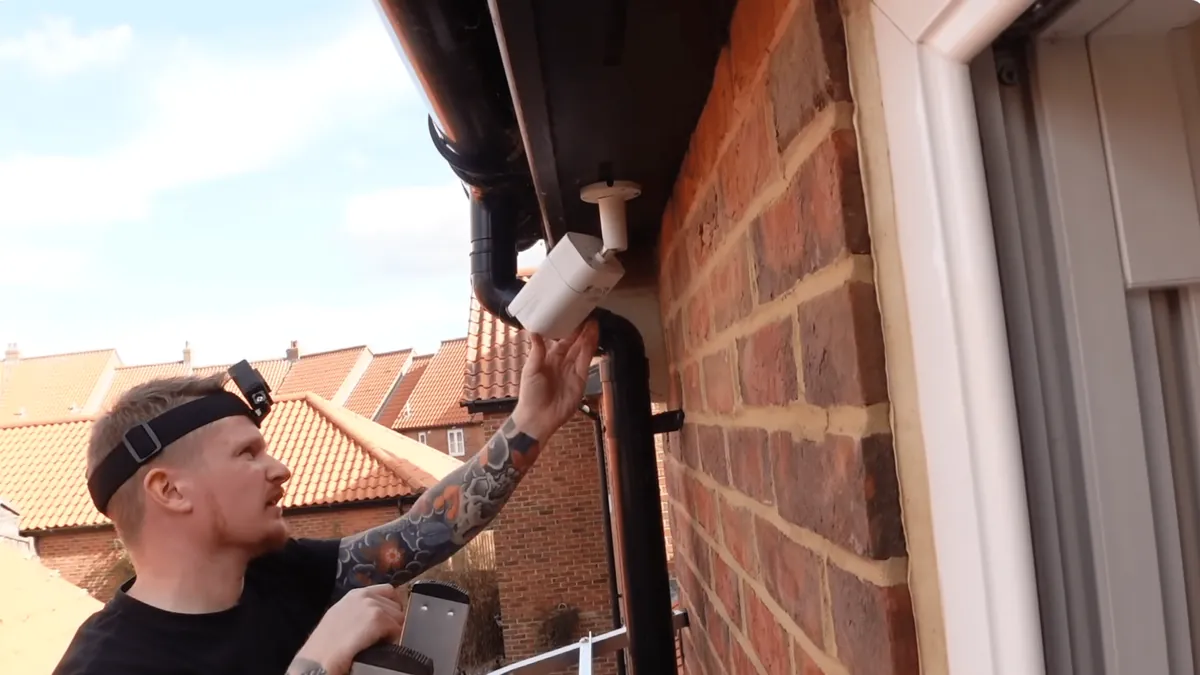
Mount at 2.5-4m, angled down toward plate height. Place the capture zone where the vehicle is straight, not turning. For barrier lanes, trigger the read 3-6m before the barrier so the decision arrives before the car does.
Night Capture: IR and Exposure
Half of all plate capture happens after dark, and night is where cheap systems fail. The failure is almost always exposure: headlights flare, plates bloom white, or the shutter is too slow for the light available.
1. IR wavelength and plate reflection
850nm IR is the standard for plate work. Reflective plate material bounces the IR back to the sensor, producing the bright plate against a dark background that OCR loves. Check that the camera has an IR-cut filter that switches out at night and a smart IR mode that does not over-brighten close plates. A plate that blooms to pure white reads as zero characters.
2. Shutter speed and WDR
Run the shutter at 1/1000s minimum for parking speeds and 1/5000-1/10000s for road speeds (typical). Wide dynamic range of 100-120dB recovers the plate when headlights are in frame. Some cameras support exposure priority on a region of interest: the plate zone gets the exposure, and the rest of the scene can blow out.
3. Weather and plate condition
Dirty plates, rain film, mud and snow cut read rates 10-30% versus a clean plate (typical). Spec the system for the worst plate you must read, not the best. A parking system that must catch every plate needs the headroom; a watchlist system that only alerts on known bad actors tolerates misses.
Whitelist and Blacklist: Access Logic
Most ANPR systems exist to answer one question: is this plate allowed? The answer logic is a whitelist, a blacklist, or both.
1. Whitelist: allow known plates
A whitelist is the allow-list of plates that open the barrier or gate. The camera reads the plate, the system matches it against the list, and a relay closes to raise the barrier. Match decisions in under a second are typical; the gate hardware, not the recognition, usually sets the total delay.
2. Blacklist: flag unknown or banned plates
A blacklist flags plates on a watchlist: stolen vehicles, banned tenants, trespassers. The system raises an alert, logs the read, and optionally triggers a camera follow. Blacklist systems tolerate lower read rates, because a miss is a missed alert, not a blocked customer.
3. Data handling and privacy
Plate data is personal data under most privacy regimes. Store only what the operation needs, set retention periods, and restrict who can search the plate history. This matters in procurement: ask the supplier how recognition data is stored, exported and erased.
NVR Integration and ONVIF
A plate camera that cannot talk to your recording system is a doorstop with a lens. The good news: modern plate capture cameras integrate over the same open standards as any IP camera. ONVIF Profile S streaming, RTSP and alarm I/O are all standard. Your existing NVR records the plate camera, and the recognition metadata rides along.
1. Streams, overlays and snapshots
The camera publishes a main stream for recording and a sub-stream for live view, exactly like a standard IP camera. Plate text is overlaid on the frame or attached as metadata. The NVR stores the video, and the recognition result is searchable as an event.
2. Search footage by plate number
This is the killer integration feature. Instead of scrubbing hours of video, the operator types a plate into the NVR search and jumps to every frame where that plate was read. Plate-searchable recording turns a passive archive into an investigation tool. Ask your NVR supplier whether third-party plate metadata is indexed.
3. Bandwidth and storage math
A 4MP plate camera at H.265+ with a 4 Mbps main stream writes roughly 43 GB per day at 24/7. Two cameras over 30 days need about 2.6 TB. Add a 512 kbps sub-stream for live view and plan the PoE budget at 12-20W per outdoor camera with 20% headroom. The full recording architecture is covered in our NVR guide.
ANPR vs Face Recognition Camera: Different Jobs
"Face recognition camera" searches often land on plate reading pages, and the confusion is worth clearing up. Both are edge-AI cameras that recognize something, but they recognize different subjects with different legal and technical weight.
| Factor | ANPR / LPR camera | Face recognition camera |
|---|---|---|
| Target | Vehicles: plates | People: faces |
| Input | Reflective plate, IR-friendly | Faces, skin tone, pose, mask |
| Accuracy drivers | Angle, speed, plate condition | Light, pose, occlusion, distance |
| Privacy weight | Plate data is personal data | Biometric data, stricter rules |
| Typical use | Gates, tolls, parking, enforcement | Access control, people counting, watchlists |
| Night performance | Strong with IR | Weak; IR washes faces |
1. When ANPR wins
Plate capture wins wherever the subject is a vehicle. Plates are standardized, reflective and regulated, a far more predictable recognition target than a face. ANPR also works in the dark with IR, which face recognition struggles with. Gates, tolls, parking and vehicle watchlists stay on ANPR.
2. When face recognition wins
Face recognition wins wherever the subject is a person: office access, staff time tracking, visitor watchlists. It is biometric, which carries stricter consent and data protection obligations in most jurisdictions. Some sites run both: ANPR at the vehicle gate and a face recognition camera at the lobby door, feeding one access platform.
3. Combined systems
Integrators increasingly bundle the two: the gate reads the plate, the lobby reads the face, and one database ties vehicle to person. Keep the two data streams separate in the backend, because the legal treatment differs even when the hardware sits side by side.
OEM and B2B Procurement: Factory Pricing for Plate Systems
The "lpr camera supplier" search is a B2B signal: a reseller or integrator looking for factory-direct supply of license plate reader cameras instead of retail. The economics mirror the rest of CCTV: factory-direct pricing typically lands 30-50% below retail equivalents (typical), with MOQ discounts starting at 50-100 units.
1. What to ask a plate camera manufacturer
- Lens and sensor: what focal length range ships, and can the OCR engine be tuned for your plate formats?
- Shutter and IR: confirmed 1/1000-1/10000s shutter and 850nm IR with smart control
- ONVIF compliance: Profile S and G, RTSP, and documented alarm I/O
- Recognition API: plate metadata format, confidence score access, webhook output
- Firmware and privacy: update cadence, data storage, export and erase functions
- Commercial: MOQ, lead time (typically 15-35 days), 2-year warranty, CE / FCC / RoHS docs
2. OEM and ODM paths
Private label is standard: your logo on the housing, your app name in the firmware, custom packaging. ODM goes further, with modified lens, IR or firmware logic for your brand. Wholesale buyers standardize one ANPR camera SKU plus one NVR model, which keeps spares shallow and training uniform.
3. Plan the system, not the box
Match the plate camera count to NVR channels, add 5% spares, and order the mounting kit with the camera. For multi-site rollouts, ask about pre-configured units: recognition thresholds, whitelist import and network settings flashed before shipping. That is what turns a pile of hardware into a deployable ANPR system.

ANPR Questions Buyers Ask
1. How far can a license plate reader camera read?
Parking lanes read at 3-8m; toll and enforcement systems stretch to 15-30m with tele lenses. The limit is pixels-on-plate, not raw distance: the plate must span 120-200 pixels at the capture point. A 25-50mm lens buys the distance; no resolution upgrade replaces it.
2. Can it read plates at night?
Yes, with 850nm IR and a switching IR-cut filter. Reflective plates return the IR light, so night reads can match daytime ones. Watch for IR bloom on close plates and spec WDR for headlight glare. A "plate reading camera" without IR is a daytime-only toy.
3. How accurate is ANPR?
95-99% on clean, well-lit, straight-on plates is typical. Dirt, damage, angle, speed and weather each cut points. Plan the system around the worst plate you must read, and demand confidence scores so you can set your own acceptance threshold.
4. Does it work with my existing NVR?
If the NVR is ONVIF-compliant and the camera exposes RTSP, recording works out of the box. Plate-searchable metadata needs NVR support for third-party events, so confirm it before ordering. Our IP camera guide covers the standards in detail.
5. How much does an LPR camera system cost?
Retail plate cameras run from a few hundred dollars into four figures depending on lens, sensor and OCR quality. Factory-direct pricing on the same class typically sits 30-50% lower. That is why "license plate reader cost", "lpr system cost" and "license plate readers for sale" searches end at wholesale suppliers.
6. Can I use a normal security camera?
You can try, but wide-angle lenses spread pixels too thin and slow shutters blur the plate. The "security camera that can read license plates" question usually ends with a dedicated "plate reader camera". A tele lens, fast shutter and OCR engine are not optional extras.
The Bottom Line
An ANPR camera has one simple job: read plates fast, in the dark, at an angle, and output the text. The buying decision is five numbers: read distance, lens focal length, shutter speed, IR range and the confidence threshold you will accept. Fixed lanes for accuracy, mobile units for coverage, whitelists for access, blacklists for watchlists. Open ONVIF integration keeps the footage searchable in the NVR you already run. Buy as a system, spec for the worst plate, and let the acronym, whether ANPR, ALPR or LPR, be the last thing you argue about. The plate will be the first thing you read.
NEXT STEP
Ready to Upgrade to Full-Color Night Vision?
Send us your requirements — our team responds within 24 hours with pricing and lead time.
Written by
Ray ChanCCTV Buyer's Guide Author · Full-Color Night Vision Specialist. Ray helps global importers and integrators source factory-direct security cameras.