
Bullet Camera Guide 2026: The Complete Outdoor Security Buyer Manual
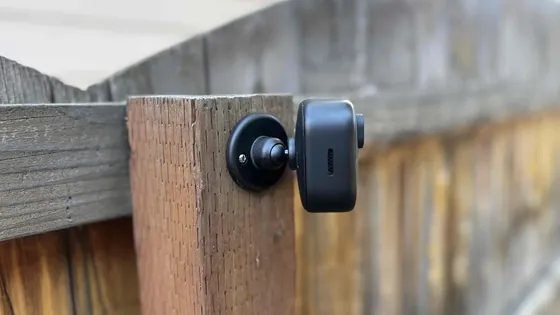
Table of Contents
A bullet camera with a fixed 3.6mm lens covers roughly 15 meters of fence line — which means a suspect standing 30 meters away occupies only a few dozen pixels of the frame, far too small to identify in court. This single mismatch between lens and distance causes more outdoor security failures than any hardware defect. In a widely cited University of North Carolina survey of convicted burglars, 83% said they check for cameras before attempting a break-in and 60% said a visible camera would make them pick a different target — so the bullet camera's unmistakable cylindrical silhouette is itself a working security layer. A 4MP bullet camera with a 2.8-12mm varifocal lens and 30-100m IR range can identify a person at the far end of a parking lot that a fixed-lens unit simply cannot see.
This guide is the complete bullet camera manual: what a bullet camera is and why its shape deters, the fixed vs varifocal lens decision from 2.8mm to 12mm, how IR night vision range really works from 30m to 100m, outdoor protection in IP66 and IP67 terms, mounting angles that capture faces instead of hat tops, bullet vs dome vs turret trade-offs, per-site selection, and the wholesale path for resellers and integrators buying from a factory. By the end you will be able to read any bullet camera quote line by line and know exactly which model your site needs.
Keep reading for more!
The Snapshot
- A bullet camera is a cylindrical, bracket-mounted outdoor camera with an integrated sunshield and IR LED array — the longest-range and most visible form factor in CCTV.
- Fixed lenses cover 2.8mm (about 104° field of view), 4mm (80°), 6mm (50°) and 8mm (37°); a 2.8-12mm varifocal lens covers all of these in one body and is dialed in at installation.
- IR night vision ranges from 30m on entry models to 40-60m on mid-range units and 80-100m on long-range arrays; below about 1 lux the camera switches to black-and-white IR mode.
- Weather protection starts at IP66 (dust-tight, powerful water jets) with IP67 for full immersion; outdoor housings are die-cast aluminum rated IK08-IK10, operating from -30°C to 60°C.
- One PoE cable carries power and data up to 100m (IEEE 802.3af/at); H.265+ encoding cuts storage roughly 50-70% versus H.264 at equal image quality.
What Is a Bullet Camera?
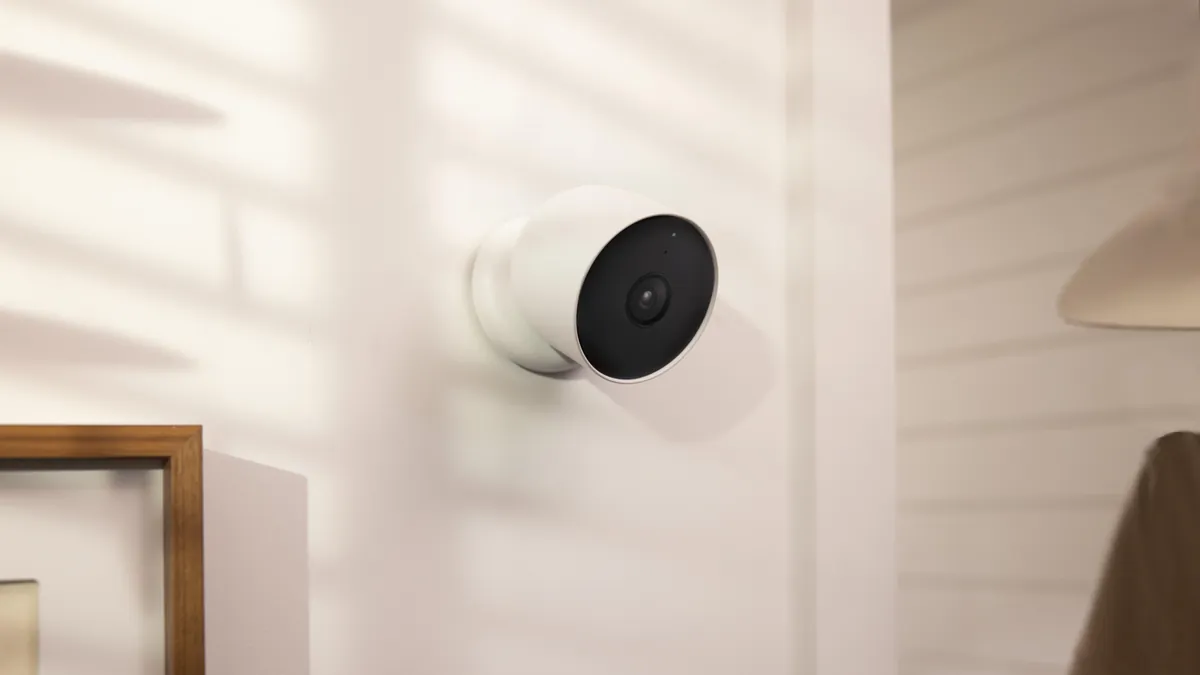
A bullet camera is an outdoor security camera shaped like a cylinder or a rifle cartridge — that is where the name comes from, and why the "camera ip bullet" search usually returns long, horizontal housings with a bracket on one end and a lens behind a glass window on the other. A bullet security camera combines four parts in one body: a die-cast aluminum housing, an integrated mounting bracket, a sunshield that extends past the lens, and an IR LED array around the lens for night vision. Typical units draw 6-12W with IR active and record 1080p to 8MP depending on the sensor.
The design exists for one reason: long outdoor sightlines. Where a dome or turret camera tucks into a ceiling corner, a bullet camera is engineered to be aimed down a fence line, across a yard or along a parking aisle from a wall or pole mount. The sunshield keeps rain off the glass and blocks glare; the integrated bracket removes the separate mount that other form factors need. On PoE models, a single Cat5e/Cat6 cable delivers power and data up to 100m per run, which is why "ip camera outdoor bullets" installations dominate perimeter jobs.
Deterrence is the second job of the bullet camera, and it is measurable. The long barrel is the most recognizable camera shape in the world. Visible at 30-50m during the day, and marked by a faint red glow from 850nm IR LEDs at night, a bullet camera announces surveillance before anyone reads a sign. For integrators selling to warehouses, dealerships and construction sites, this visible deterrent is often the entire reason the buyer chose bullets over discreet domes.
Typical placements are exterior walls at 3-5m height, perimeter fence posts, gate pillars, parking lot light poles and loading dock corners. The "bullet cctv camera" search reflects exactly this job: a weatherproof, long-range camera that records a defined outdoor channel day and night, feeding an NVR alongside domes and PTZ heads on the same network.
Bullet vs Dome vs Turret: Form Factor Comparison
The "bullet camera vs dome" question is the most common form-factor debate in CCTV, and the answer changes with the site. Turrets are the third option buyers forget. The table below is the version to keep when comparing the three.
| Factor | Bullet camera | Dome camera | Turret camera |
|---|---|---|---|
| Shape | Cylindrical barrel, side bracket | Half-sphere under a round base | Compact "eyeball" on a short stem |
| Typical IR range | 30-100m | 10-30m | 20-40m |
| Vandal resistance | IK08-IK10 body | IK10 dome, best in class | IK08-IK10, moderate |
| Deterrence value | Highest — impossible to miss | Low — blends into ceiling | Medium |
| Glare / reflection | Minimal, sunshield included | Dome glass can reflect IR at night | Very low, flat front glass |
| Best positions | Fences, walls, poles, long sightlines | Indoor ceilings, shops, offices | Covered outdoor, walls, corridors |
Bullet wins wherever the task is distance. A fence line, a parking aisle or a gate approach is a linear scene: the camera must see far along one axis, and the bullet's long IR array and barrel aim are built for it. Dome wins wherever discretion and tamper resistance matter more than range — a retail shop ceiling, a bank lobby, a corridor inside a building. The dome's IK10 housing shrugs off impacts, but its curved glass can reflect its own IR at night, which is why domes carry shorter IR ranges.
Turret cameras split the difference. The "turret camera vs dome" search is usually a buyer comparing a compact outdoor eyeball against a dome, and the practical answer is that turrets mount flush on walls with a flat glass window (no IR reflection) at a lower cost than a comparable bullet. But their IR range tops out around 20-40m, so the "turret ip camera" fits covered outdoor spots and short driveways, not long perimeters. For anything over 40m of outdoor line of sight, the bullet remains the right tool.
Fixed vs Varifocal Lens: 2.8mm to 12mm
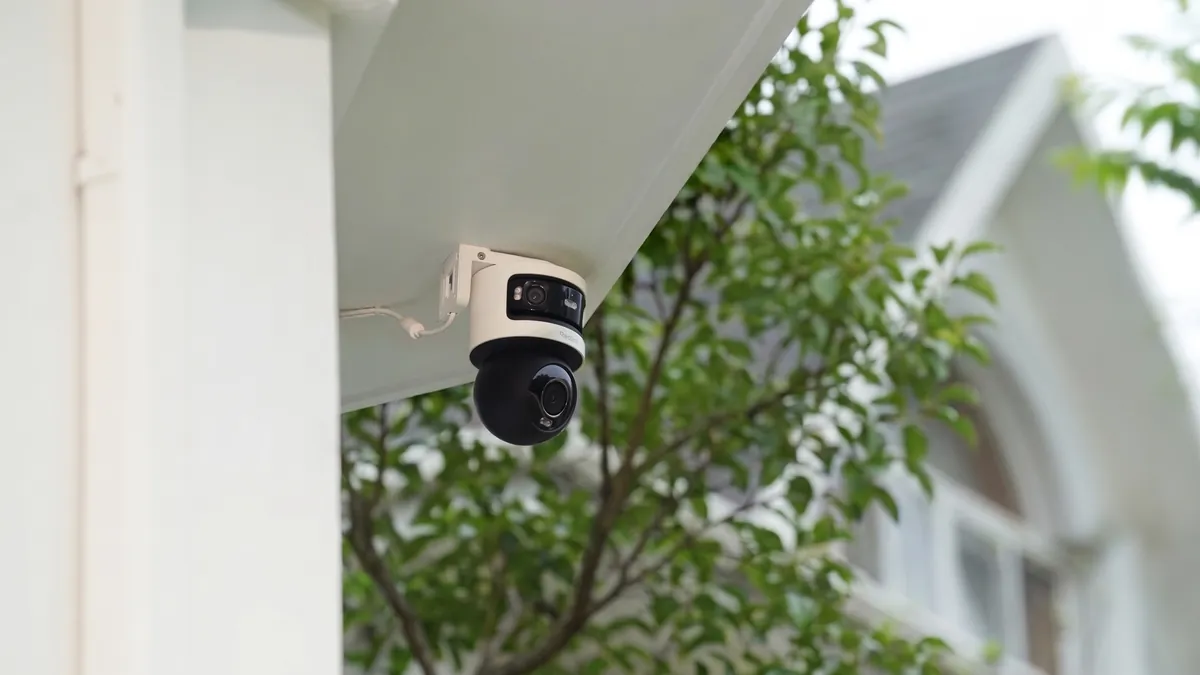
The lens is the actual buying decision for a bullet camera. Focal length sets the field of view, and field of view sets what the camera can identify at what distance. The numbers below are for a 1/2.7-inch sensor, the most common sensor size in 4MP bullets.
| Focal length | Field of view (approx.) | Best scene distance | Typical use |
|---|---|---|---|
| 2.8mm | 104° | 3-8m | Wide entrance, gate, short aisle |
| 4mm | 80° | 8-15m | Default all-rounder, shop front, driveway |
| 6mm | 50° | 15-25m | Fence line, parking bay rows |
| 8mm | 37° | 25-40m | Gate approach, long corridors, LPR distance |
| 12mm | 24° | 40-60m+ | Long perimeter, entry road, field edge |
1. Fixed lenses: cheaper, calibrated, one job
A fixed lens is glued to one focal length at the factory — 2.8mm, 3.6mm, 4mm or 6mm are the common options. Fixed bullets are cheaper (typically 10-20% below a varifocal twin), simpler, and immune to focus drift over years of vibration. The trade is that you must choose the field of view before you install, and a wrong guess means either reordering cameras or living with too-wide or too-narrow coverage. For repeatable jobs — every gate gets a 6mm, every shop front gets a 4mm — fixed lenses are the efficient choice.
2. Varifocal lenses: tune the shot at the site
A varifocal lens has a manually adjustable focal range, most commonly 2.8-12mm. You mount the camera, watch the live image, and rotate the zoom ring until the scene fits exactly — then lock it. This is the single biggest reason the "camera bullet varifocal" and "varifocal camera" searches exist: installers would rather pay a little more than guess a fixed focal length on a pole. A varifocal lens covers the full 104° to 24° range of the table above in one body, which also makes it the natural choice for wholesale stock that must satisfy different sites from one SKU.
3. Motorized varifocal: remote zoom
Motorized varifocal lenses add a small motor so the zoom can be adjusted remotely from the app, the NVR or ONVIF commands. The "motorized varifocal lens" buyer is usually an integrator who wants to re-aim a camera without climbing a ladder, or who wants a fixed-position camera that can be zoomed into a suspicious area on demand. They cost more than manual varifocal units, and are worth it only when remote re-framing has real value — a gate camera whose view may change, or a dock camera re-aimed between seasons.
Which should you buy? The "varifocal lens security camera" and "varifocal security camera" searches point the same way: if the site is measured and repeatable, fixed; if the distance is uncertain, varied or shared across stock, varifocal. The "cctv camera varifocal lens" and "varifocal lens cctv" long-tails describe the same decision from a technician's angle — a "varifocal cctv camera" on a wall mount with a "varifocal camera poe" connection is the standard flexible outdoor build. Note that varifocal adjustment is done at installation: order a "varifocal camera price" comparison across suppliers before committing, because the lens spec, not the body, is what changes the delivered image.
IR Night Vision: Range from 30m to 100m
IR (infrared) night vision is how a bullet camera sees in total darkness. Below roughly 1 lux — the light of a dim moon — the camera drops color and switches to black-and-white, and IR LEDs around the lens illuminate the scene with light the sensor can see and people cannot. The rated IR range is the distance at which the camera still produces a usable image at 0 lux, and it is the spec that separates entry bullets from long-range units.
Bullet cameras are the IR champions of CCTV because the barrel gives the LEDs a long base and a clear line of aim. The practical bands are: 30m for entry models with a single row of LEDs, 40-60m for mid-range units with a double array, and 80-100m for long-range models with fourth-generation LED arrays and F1.0 apertures. That is why every "long range security camera" and "long range surveillance camera" search ends at a bullet: domes rarely exceed 30m, turrets 40m, while the "long range cctv camera" spec sheet shows a bullet barrel.
1. Wavelength: 850nm vs 940nm
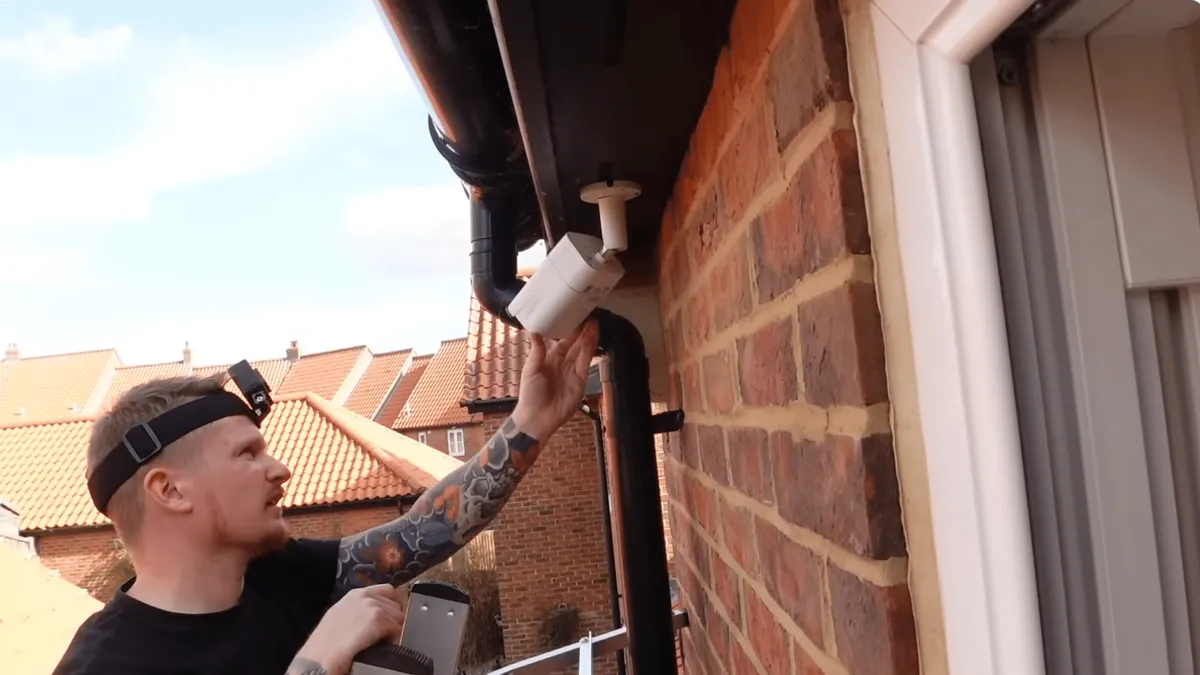
Most outdoor bullets use 850nm IR, which carries further and shows a faint red glow on the camera — a useful deterrence side effect. 940nm IR is invisible to the eye but shorter-range, so it suits discreet indoor or residential positions. A "long range night vision security camera" search is almost always an 850nm requirement.
2. Smart IR and real-world derating
Smart IR automatically dims the LEDs when a subject walks close, so faces do not white out. Treat the rated range as an ideal-condition number: rain, fog, dust and dirty glass can cut effective range 20-30%. A camera rated 60m in a datasheet reliably covers 40-50m in a coastal or dusty site. Match the rated range to 1.5x the distance you actually need.
3. Lens and IR work together
IR range only helps if the lens resolves the distance. A 2.8mm lens at 60m sees too little detail to identify anyone even with perfect IR; a 6mm or 8mm lens concentrates the same illumination on a narrower scene and delivers a readable image at range. The "long range outdoor cctv camera" configuration is therefore a varifocal 2.8-12mm body, a long-range IR array, and a lens set near the tele end for the actual target distance.
Outdoor Protection: IP66, IP67 and Housing
An outdoor bullet camera must survive rain, sun, dust and temperature swings for years. The two numbers that decide this are the IP rating and the housing construction. IP66 means dust-tight and protected against powerful water jets; IP67 adds full immersion in 1m of water for 30 minutes. Both are acceptable for exterior mounts, and either is a step above the IP65 minimum that cheap units carry. The "cam full ip66" shorthand used by some distributors simply means a complete camera with a fully sealed housing and cable gland, ready for exterior mounting.
Read the housing, not just the label. A genuine outdoor bullet is die-cast aluminum with a powder-coated finish and UV-stabilized parts — plastic housings yellow and crack within two seasons of direct sun. The sunshield that extends past the lens doubles as glare control and rain protection. Look for IK08 or IK10 impact ratings (energy of 5-20 joules, roughly the blow of a hammer) on the body, a sealed cable gland at the tail, and a desiccant pack behind the glass to stop internal fogging.
Climate specs matter regionally. Standard outdoor bullets operate from -30°C to 60°C; models with a built-in heater keep the glass clear below freezing, and a fan or vent handles tropical heat. For PoE installs, check for 6KV network surge protection on the Ethernet port — the single most common cause of outdoor camera failure is a lightning-surge spike through the cable, not the weather itself. The "outdoor bullet camera" you spec for a desert site and the one for a Nordic site may be the same body with different heater options, so confirm the operating range on the datasheet before ordering a region's stock.
Finally, the connection point is part of the weather seal. Use a weatherproof junction box or conduit cover for the cable exit; an exposed RJ45 connector and dangling loop of cable is where water actually enters most "waterproof" installs. The camera can be IP67 while the install is IP20 if the junction is left open.
Mounting Angle and Installation
Mounting angle decides whether your bullet camera records faces or the tops of heads. The rules below apply to every outdoor bullet install and cost nothing to follow.
1. Height: 3-5m, never lower than 2.5m
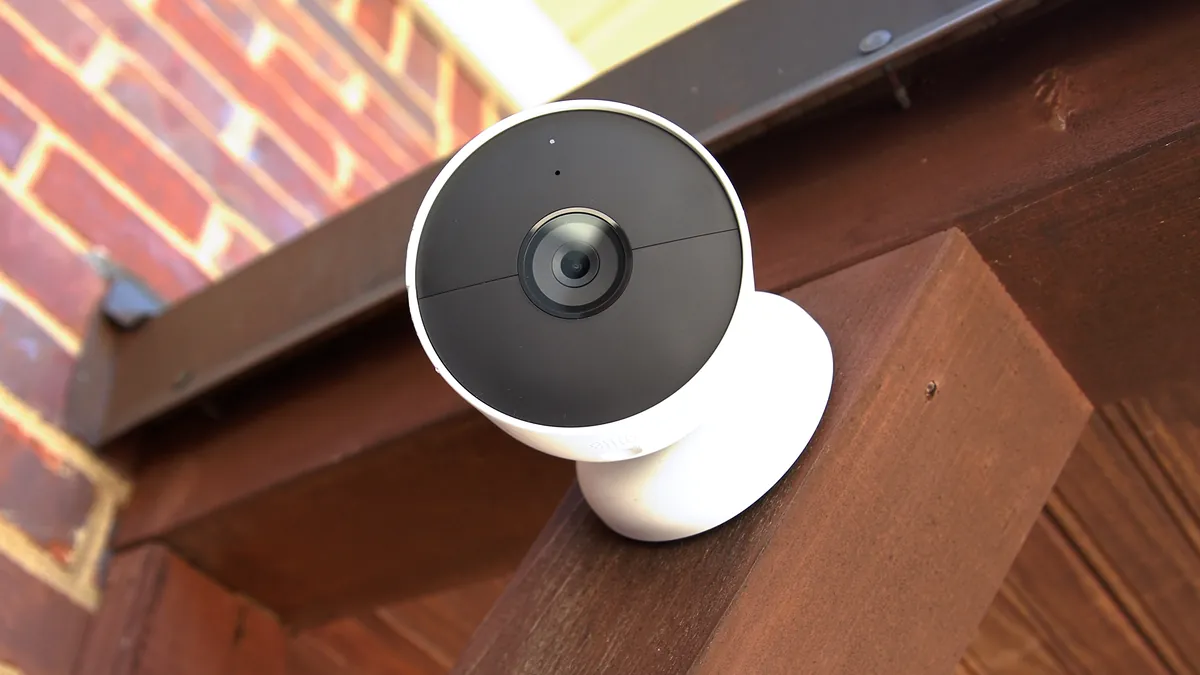
Mount so the camera cannot be reached and adjusted from the ground, but is low enough to see faces: 3-5m on walls and poles is the working band. Below 2.5m the camera is vandal bait; above 6m faces shrink and IR range drops because the LEDs aim past the scene.
2. Tilt: 15-30° down
Aim the barrel 15-30° below horizontal so subjects enter the frame at head-and-shoulders height. Level or upward angles produce the classic useless footage of foreheads and hat brims. If the camera covers a 10m gate from a 4m mount, tilt roughly 20° and verify with the live view.
3. Aim along the axis, not across it
For a fence line or aisle, point the camera along the run rather than across it. A camera looking down the fence sees a suspect for 40m of approach; the same camera pointed across the fence sees a 3m sliver. This one habit multiplies effective coverage more than any spec upgrade.
4. Avoid backlight and IR reflection
Do not aim into sunrise, sunset or bright lamps — faces will clip to black without WDR. Keep the barrel clear of walls, railings and foliage within 5m, because IR LEDs reflect off close surfaces and wash out the foreground. Use the camera's motion mask to ignore waving trees and passing headlights on public roads.
For B2B installs, standardize the mounting kit: a wall bracket or pole clamp, a junction box for the cable exit, and PoE cable with surge protection at the switch end. A predictable mounting procedure is what lets a two-person crew install 20 bullets in a day instead of five.
Applications: Perimeter, Parking and Factory Sites
Bullet cameras earn their keep on linear outdoor scenes. The three classic deployments cover most commercial demand.
1. Perimeter and fence lines
Spacing rule of thumb: a 6mm fixed bullet or a 2.8-12mm varifocal set near 8-10mm, mounted every 40-60m along the fence and aimed down the run, gives overlapping coverage with readable faces inside the boundary. Long-range models with 80-100m IR extend the spacing on dark perimeters where street light never reaches.
2. Parking lots and gates
Entry and exit points get 4-6mm bullets on poles at 3.5-4.5m, aimed at the plate height of vehicles. At 20m, an 8mm lens reads a license plate reliably on a 4MP sensor; add 120dB WDR so plates do not clip in headlight glare. A 40-60m IR bullet keeps the lane visible through the dark hours.
3. Factory yards and loading docks
Docks are the classic "long range surveillance camera" site: 4MP or 8MP varifocal bullets on building corners, 80-100m IR across the yard, and fixed 4mm units per dock door for handover evidence. H.265+ keeps the bitrate sane across 16-32 cameras on one NVR, and 8MP models give operators the pixel density to zoom into a truck cab after the fact.
4. Farms, construction sites and remote yards
Where power does not exist, solar-and-4G bullet systems cover the same perimeter logic without trenching — see the solar camera range and 4G camera range for those builds. The site math is identical: choose the lens by distance, the IR by night darkness, and the housing by climate.
Image Quality Specs: Resolution and WDR
Form factor and lens decide whether a bullet camera sees the right scene; resolution and WDR decide whether the footage convicts. In 2026 the entry floor is 1080p (2MP), the working standard is 4MP (2560×1440), and 8MP (3840×2160) is the premium tier for distance work where operators zoom into evidence after the event.
Pixel density, not resolution alone, sets identification distance. A 4MP sensor on a 2.8mm lens spreads its pixels over 104°, so a face at 20m is tiny; the same sensor behind a 12mm lens concentrates pixels into 24° and reads the same face at 40-50m. This is why high-resolution bullets are paired with tele lenses on long perimeters — the combination, not either spec alone, decides what the footage proves.
WDR (wide dynamic range) fixes the outdoor failure mode where a subject walks from bright sky into shadow and the face clips black. True WDR of 100-120dB handles a driveway or dock at sunrise; a label without a number means nothing. Add 3D DNR for clean low-light images, a fast shutter (1/10000s) for vehicles, and dual streams — a 4MP main stream at 2-8 Mbps for recording and a sub-stream for smooth phone viewing.
Storage math keeps systems honest: a 4MP camera at 4 Mbps writes roughly 43 GB per day in H.265; H.265+ trims that 50-70%. A 4TB drive in an NVR therefore holds 16-32 days of one 4MP bullet at H.265+ — plan retention around the bitrate, not the drive label. The full recording architecture is covered in the NVR guide.
How to Choose a Bullet Camera
Selection is five questions answered in order. Walk any site through them and the model picks itself.
| Site scenario | Resolution | Lens | IR range | Housing |
|---|---|---|---|---|
| Small shop front, 8m | 1080p-4MP | 2.8-4mm fixed | 30m | IP66, standard |
| Driveway or gate, 15-25m | 4MP | 6mm fixed or 2.8-12mm varifocal | 40-60m | IP66, standard |
| Parking lot entrance, plate reading | 4MP-8MP | 8-12mm, or varifocal set tele | 60m | IP66/67, WDR 120dB |
| Warehouse yard, 40-100m | 4MP-8MP | 2.8-12mm varifocal | 80-100m | IP66/67, heater option |
| Farm field / remote site | 4MP | 6mm or varifocal | 60-100m | IP67, solar-4G build |
1. What is the distance to identify?
Measure the farthest point where a face must be readable. That distance sets the lens (use the table in the lens section) — nothing else compensates for the wrong focal length.
2. How dark is the site at night?
Dark perimeter without street light needs 60-100m IR; a lit driveway gets by with 30-40m. Remember to derate the datasheet range 20-30% for real weather.
3. What is the climate?
Rain, salt air or frost push you to IP67, aluminum housings and heater options. Indoor-under-eave positions can step down to IP65.
4. What is the evidence requirement?
Insurance-grade identification wants 4MP minimum, 8MP for plate or long-distance work, and 120dB WDR for any scene with backlight.
5. Fixed or varifocal?
Measured, repeatable site: fixed. Uncertain distance, multi-site stock or installer flexibility: 2.8-12mm varifocal. The price gap is small and the re-install cost of a wrong fixed lens is not.
Wholesale and Bulk Buying: Factory Direct
Bullet cameras are a volume product, and the margin lives in the buying structure, not the retail price. Factory-direct pricing for an outdoor bullet camera typically runs $12-20 for a 1080p fixed model, $20-35 for a 4MP varifocal, and $35-55 for an 8MP long-range unit with 80-100m IR — before MOQ discounts, which usually start at 50-100 units and deepen at 500-1000. The "varifocal camera price" question from a distributor is answered by comparing the same lens spec, sensor size and IR array across suppliers, because body branding moves the price more than the imaging core does.
B2B buyers should lock four things into every contract: MOQ, sample policy, lead time and certifications. Typical factory lead times run 15-35 days after sample approval. Ask for CE, FCC and RoHS documentation up front, a 1-2 year warranty with a documented RMA process, and firmware update access — outdoor cameras are network devices, and patch cadence matters as much as pixel count.
OEM and ODM are the standard factory services: your logo on the housing, your app name in the firmware, custom packaging, and even modified IR or lens specs for a private label. Wholesale buyers commonly mix one varifocal SKU (2.8-12mm, 4MP, IP66, 40-60m IR) across many sites, which keeps inventory shallow and training uniform — the same argument that drives the "camera bullet varifocal" and "camera ip bullet" volume searches on distributor platforms.
Plan the batch as a system, not a pile of cameras. Match the bullet count to NVR channel capacity (see the IP camera guide), sum the PoE wattage of all units with 20% headroom, order 5% spares of the most common SKU, and standardize one bracket kit. Resellers who bundle bullets with a compatible NVR and cabling kit sell at retail margins while the hardware cost stays at factory rates.
Bullet Camera Questions Buyers Ask
1. Fixed lens or varifocal lens — which is better?
Neither is universally better. Fixed lenses cost less and never drift; varifocal lenses (2.8-12mm typical) let you set the exact field of view at installation and cover many sites from one SKU. Choose fixed for measured, repeatable scenes, varifocal for anything uncertain or shared across stock.
2. How far can a bullet camera see at night?
IR range bands are 30m (entry), 40-60m (mid-range) and 80-100m (long-range arrays). Rated range is an ideal-condition figure — derate 20-30% for rain, fog and dust, and remember the lens must resolve the distance the IR illuminates.
3. Bullet camera vs dome — which should I pick?
Pick bullets for outdoor distance and deterrence (30-100m IR, unmistakable presence). Pick domes for indoor ceilings and vandal-prone spots (IK10, discreet). Turrets split the difference for short covered outdoor scenes. The scene length decides, not the brand.
4. Do bullet cameras need a junction box?
Not technically, but the cable exit is the weak point of any IP66/IP67 install. A weatherproof junction box or conduit cover protects the connector and keeps water out of the actual weak link — the joint, not the housing.
5. Is 4MP enough, or do I need 8MP?
4MP (2560×1440) is the working standard for identification on most outdoor scenes. Move to 8MP when you must zoom into distant evidence — plates, truck cabs, far fence lines — since pixel density at the tele end of the lens is what makes the zoom usable.
The Bottom Line
A bullet camera is the outdoor workhorse of CCTV because it combines three things no other form factor matches: the longest IR range (30-100m), the strongest visible deterrence, and a housing built for years of weather (IP66/IP67, aluminum, IK08+). The buying decision is really four numbers: the focal length that matches your identification distance, the IR range derated for real weather, the IP and climate rating for your region, and the resolution that supports the evidence you need. Buy fixed lenses for measured sites, 2.8-12mm varifocal for flexibility and stock, and buy wholesale as a system — camera, NVR channels, PoE budget and spares together. Get those four numbers right and the bullet camera is the most reliable, most defensible purchase in any outdoor security system.
NEXT STEP
Ready to Upgrade to Full-Color Night Vision?
Send us your requirements — our team responds within 24 hours with pricing and lead time.
Written by
Ray ChanCCTV Buyer's Guide Author · Full-Color Night Vision Specialist. Ray helps global importers and integrators source factory-direct security cameras.