
PTZ Camera Guide: The Complete 2026 Buyer Manual for Pan Tilt Zoom Cameras
Table of Contents
The average PTZ buyer makes three mistakes before the camera is even mounted: they pay for digital zoom that destroys detail instead of optical zoom that preserves it, they install the head where the pan range slams into a wall, and they skip presets so the camera patrols an empty aisle while the delivery bay gets hit. A 25x optical zoom PTZ identifies a human face at roughly 60 meters — four to six times the identification distance of a fixed 4MP lens — but only if it is aimed, scheduled and powered correctly. One wrong spec choice, like a 16x digital zoom sold as "32x total zoom", can turn a $200 camera into a $200 paperweight.
This guide covers the pan tilt zoom principle from the motor up: how pan, tilt and zoom actually work, the optical zoom vs digital zoom difference with real focal-length math, pan and tilt ranges and speeds, presets and auto cruise scheduling, outdoor waterproofing and durability, installation and configuration step by step, a hard cost comparison between one PTZ and multiple fixed cameras, and how to buy wholesale from ptz camera manufacturers without paying retail markup. By the end you will be able to read any PTZ spec sheet and any supplier quote without guessing.
Keep reading for more!
The Snapshot
- A PTZ camera is one motorized camera head that pans (rotates horizontally), tilts (rotates vertically) and zooms — it replaces 3-6 fixed cameras for area coverage, with one tradeoff: it can only watch one direction at a time.
- Optical zoom is the only zoom that keeps detail. A 20x optical lens (roughly 4.8-96mm focal length) resolves a license plate at 40-60 meters; digital zoom at 16x on a 1080p sensor leaves effective detail below 480p-class quality.
- Pan range is either 355° with a mechanical stop or 360° continuous; tilt typically spans -5° to 90° with auto-flip. High-speed units pan at up to 300° per second, so a full 360° sweep takes about 1.2 seconds.
- Preset memory runs 128-512 positions, with 1-8 patrol patterns and scheduled auto cruise — the difference between a camera that watches everything on a timer and one that stares at one spot forever.
- Outdoor PTZ cameras are rated IP66 or IP67, run on PoE+ (802.3at, 25.5W budget) and typically survive -30°C to +60°C with an internal heater. Wholesale pricing for a 20x IP66 unit runs roughly $80-200 at volume versus $200-800 at retail.
What Is a PTZ Camera?
"PTZ" stands for pan, tilt, zoom — the three motions a motorized security camera head performs. A pan tilt zoom camera is a complete camera, lens and motor assembly in one housing, controlled over the network (or legacy RS-485 wiring) from an NVR, VMS, joystick controller or phone app. Where a fixed camera locks its field of view at installation, a PTZ camera can sweep a parking lot, zoom into a door handle, and return to preset positions on a schedule.
The ptz camera category is the workhorse of commercial security: a single ptz security camera covers what three or four fixed lenses cover, and a ptz cctv camera in the same system as fixed domes gives you both permanent coverage and on-demand detail. The tradeoff is simultaneity — while the head is zoomed into bay 3, bay 1 is unwatched. That one fact drives every design decision in this guide, including the cost comparison later. Buyers searching for the best ptz camera and the best ptz security camera are asking the same question: which unit matches the site?
1. The three motions
Pan is horizontal rotation around the vertical axis, measured in degrees (355° or 360°). Tilt is vertical rotation, typically from slightly below horizontal up to straight down-looking angles (-5° to 90°). Zoom changes focal length to magnify the scene — optically by moving lens elements, or digitally by cropping the sensor image. The "pan tilt zoom" search term exists because buyers need all three together: pan finds the area, tilt frames it, zoom reads the detail.
2. What a PTZ camera is not
A PTZ is not a fixed camera with a motorized lens, and it is not a 360° fisheye camera. Fisheye cameras capture everything at once with digital dewarping but low per-direction detail; PTZ cameras capture one direction at high detail. The best ptz camera for a site is the one that matches the coverage pattern — and for most buyers, that means an ip camera with pan tilt and zoom so it joins the ONVIF network cleanly.
How Pan, Tilt and Zoom Work
Understanding the mechanics makes spec sheets readable. A PTZ head is two motors, a lens assembly and a control board. The pan motor drives the whole head around the vertical axis; the tilt motor drives the camera block up and down; the zoom motor (or a motorized lens group) moves glass elements to change magnification. Each motor reports its position back, which is how the camera returns to a preset with repeatability of about 0.1°.
1. Pan and tilt mechanics
Most outdoor units use stepper motors through a gear train, giving precise position control and speed ramping — the head accelerates smoothly and decelerates before stopping, instead of slamming into position. Gear quality shows up in backlash: a cheap unit overshoots a preset by 1-2° and wobbles; a well-built unit lands within a fraction of a degree. High-end models add encoders for absolute positioning, so the camera always knows where it is after a power cycle.
2. The zoom lens assembly
The optical lens is a series of glass elements that move in groups to change focal length. A 25x lens on a 2MP sensor spans roughly 4.8-120mm: at wide angle it covers about 60° of view, at full telephoto the field narrows to about 3°. This is why a 25x unit can watch a whole yard and then read a label on a box 50 meters away — the lens does the work, and the sensor keeps every pixel. The pan tilt zoom camera mount matters here: the mount must hold the head rigidly, because micro-vibration at 120mm telephoto looks like earthquake footage.
3. Control protocols
Modern ptz ip camera units speak ONVIF Profile S for streaming and PTZ control, plus RTSP for video and HTTP APIs for direct commands. Legacy coax and AHD systems use RS-485 with Pelco-D/Pelco-P protocols and a joystick controller. If you are integrating with an NVR or VMS, confirm ONVIF PTZ support — some "ONVIF-compatible" cameras stream video but skip PTZ commands in the profile. A "camera poe ptz" setup on one cable is the cleanest path: data, power and control all over a single Ethernet run.
Optical Zoom vs Digital Zoom
The single most misused number on a PTZ spec sheet is zoom. The difference between optical and digital zoom is the difference between a telescope and a screenshot you crop. This table is the version to keep.
| Factor | Optical zoom | Digital zoom |
|---|---|---|
| How it works | Lens elements move to change focal length | Image is cropped and enlarged electronically |
| Detail preserved | Yes — full sensor resolution at every step | No — cropping removes pixels |
| Typical range | 4x to 36x (25x is the outdoor workhorse) | 4x to 16x on top of optical |
| Effective 1080p at max | Full 1920×1080 at 120mm telephoto | 16x crop ≈ 120×68 effective pixels |
| When it matters | License plates, faces, labels at distance | Occasional close look, never for evidence |
1. What optical zoom actually does
Optical zoom changes focal length — the lens magnifies the scene before the sensor captures it. A "25x optical" lens with a 4.8-120mm range keeps the full 2MP or 4MP resolution at every zoom step. That is why a 20x-25x unit can identify a face at 50-70 meters: the plate or face occupies enough pixels because the lens magnified it optically, not because software guessed.
2. The digital zoom trap
Digital zoom crops the image and enlarges the remaining pixels. On a 1080p sensor, 16x digital zoom leaves you with 1920/16 = 120 pixels of effective width — useless for identification and poor for even coarse recognition. Some vendors add optical and digital together and print "32x total zoom" on the box. When a quote says "25x", ask: 25x optical, or 25x total including digital? The honest number is the optical one.
3. Reading the zoom number on a spec sheet
The reliable formula: check the focal length range (e.g. 4.8-120mm = 25x) and the sensor resolution at telephoto. A ptz 4x zoom 1080p bullet is a fixed-view camera with a mild zoom — useful for a gate, useless for a yard. For outdoor ptz surveillance cameras covering real distances, buy 20x optical as the floor and 25x-36x if license plates or faces at 50+ meters are a requirement.
Pan/Tilt Range, Speed and Limits
Range and speed decide what a PTZ can actually patrol. The table below shows the practical classes you will see from ptz camera manufacturers.
| Spec | Mini / indoor PTZ | Standard outdoor PTZ | High-speed PTZ |
|---|---|---|---|
| Pan range | 355° (mechanical stop) | 355° or 360° continuous | 360° continuous |
| Tilt range | 0° to 90° | -5° to 90° | -10° to 90° |
| Manual pan speed | 0.1°-60°/s | 0.1°-150°/s | 0.1°-300°/s |
| Preset speed | ~60°/s | ~200°/s | 240°-360°/s |
| Typical use | Shop, office, home | Yard, warehouse, parking lot | Perimeter, city surveillance |
1. Pan range: 355° vs 360°
Cheaper units pan 355° and stop — the head cannot spin continuously, and cables inside the base limit rotation. A 360° continuous unit has a slip-ring design and can rotate endlessly in either direction. For a ptz camera outdoor deployment where patrols run 24/7, 360° continuous matters: a 355° unit must unwind between patrols, adding seconds to every cycle and wearing the stop mechanism.
2. Tilt range and auto-flip
Tilt from -5° to 90° lets the camera look slightly above horizontal (useful for high mounts) down to straight below. Auto-flip is the behavior where the head, instead of tilting through the mechanical bottom, flips 180° in pan and continues tilting — keeping the image upright during tracking. If your ptz ip camera tracks vehicles or people that pass directly under the mount, verify auto-flip is supported; otherwise the view inverts or the camera stalls.
3. Speed: what the numbers mean
Manual pan speed is the slow, operator-controlled sweep — 0.1°/s for fine aiming up to 300°/s for fast repositioning. Preset speed is how fast the head jumps to a saved position, and cruise speed is the pace of an automatic patrol, typically 30-100°/s so recordings stay watchable. A 360° sweep at 300°/s takes about 1.2 seconds, but a patrol at 60°/s takes 6 seconds per lap and gives operators usable footage instead of motion blur.
Presets, Patterns and Auto Cruise
Presets are why a PTZ camera is worth buying at all. A preset is a saved pan/tilt/zoom position — the camera stores the motor coordinates and returns to them on command, on a timer, or on alarm. Entry-level units store 128 presets; mid-range outdoor units store 256; high-end models reach 512. Patrol patterns (also called tours or cruises) chain presets into a route, and scheduling decides when the route runs.
1. Presets: the memory map of your site
Good preset design is a site map, not a random list: gate, delivery bay, fuel pumps, east fence, west fence, cash office window. Number them in patrol order and give each a sensible dwell time — 8-15 seconds per stop keeps coverage meaningful. Most units also support a home position (the default resting view) and privacy masks that blank out windows or neighbor property regardless of where the head points.
2. Auto cruise and patrol scheduling
Auto cruise runs a patrol pattern on a schedule: every 15 minutes during business hours, continuously after closing. A standard outdoor unit executes 1-8 patrol patterns with adjustable order, dwell time and speed. For a ptz security camera covering a warehouse yard, a common config is: patrol 6 presets at 45°/s during the night, switch to motion-triggered preset recall when an event fires, return to patrol after 2 minutes of inactivity.
3. Auto-tracking — and when to disable it
Auto-tracking locks onto a detected object and follows it. It is genuinely useful at perimeters and gates, and genuinely annoying in busy public areas — the head chases cars, birds and shadows, burning patrol time and filling storage with worthless footage. Rule of thumb: enable auto-tracking only in low-traffic zones with clear ground rules (e.g. "track vehicles entering the gate"), and set a tracking timeout so the camera returns to patrol instead of staring at a parked car for an hour.
PTZ Types: Dome, Bullet, IP and Wireless
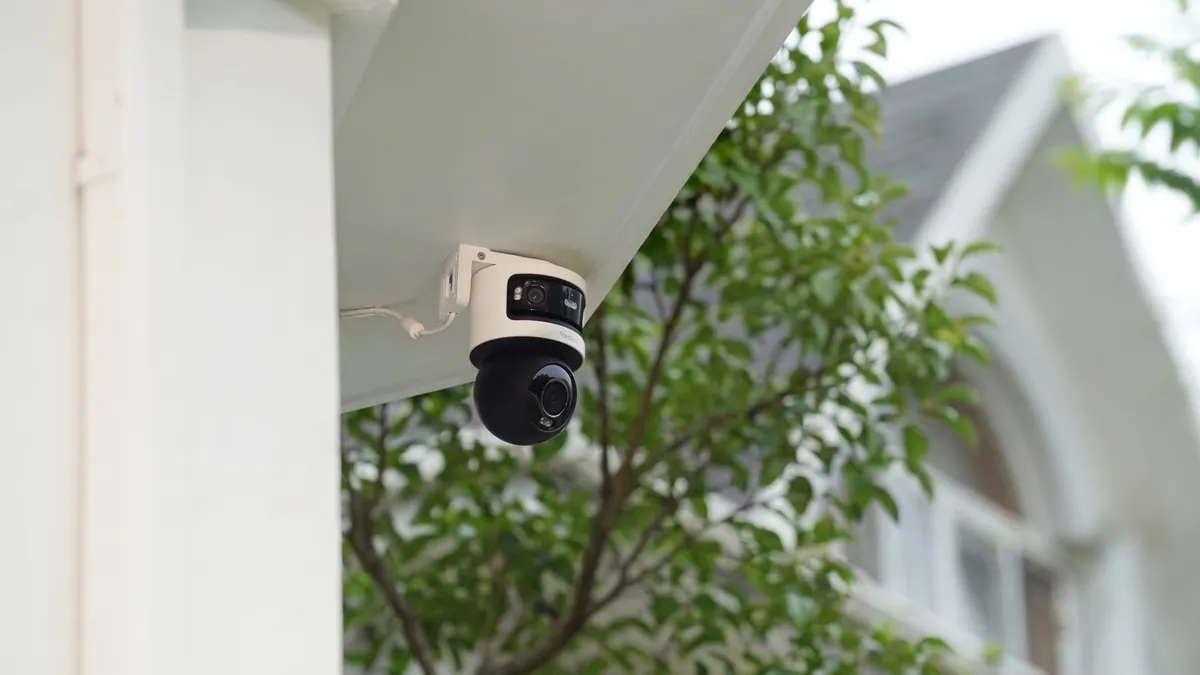
PTZ cameras come in form factors that change where they can live and what they cost. The ptz dome camera is the most common: a dome-shaped housing, discreet, often vandal-resistant, available for indoor and outdoor use. Bullet PTZ cameras are the long-range specialists — larger housings, bigger lenses (20x-36x), and the shape that makes the lens direction obvious to deter. Between them sit mini PTZ units for shops and small offices.
1. Form factors: dome vs bullet vs mini
A ptz dome camera suits ceilings, corridors and retail floors where discretion and tamper resistance matter — the dome shell protects the moving head, and IK10-rated models survive deliberate impact. Bullet PTZ units suit poles, walls and fences outdoors where range beats discretion; the exposed lens and wiper make them easier to service. A mini ptz camera outdoor covers a driveway or loading dock on a budget, usually 4x-10x optical zoom with a smaller motor — fine for proximity, weak for distance.
2. Connectivity: PoE, WiFi, 4G and solar
Most professional units are ptz ip camera designs powered over PoE+ (802.3at, up to 25.5W) — one cable for data, power and control. A wireless pan tilt zoom camera — the "wireless ptz camera" class — cuts cabling but inherits WiFi's limits: bandwidth, interference and the fact that the head draws real power, so "ptz camera outdoor wireless" models still need a mains or solar supply. For remote sites, a 4g solar security camera with ptz runs on a solar panel, battery and cellular link — no Ethernet, no grid power, at the cost of data plan and lower sustained bitrate. The "ptz ip wireless camera" and "wireless ptz ip camera" long-tails are buyers weighing exactly this trade.
3. Special variants worth knowing
A dual lens ptz camera pairs a wide fixed lens with a telephoto PTZ lens — the wide lens keeps permanent context while the tele head zooms, solving the "what was the PTZ missing?" problem. For legacy coax sites, the "ptz camera ahd coaxial" class keeps a PTZ on existing AHD infrastructure, usually capped at 1080p. And for government and institutional tenders, NDAA compliant ptz cameras — manufactured without restricted components — are increasingly a procurement requirement, not an option.
Outdoor PTZ: Waterproofing and Durability
An outdoor ptz camera rated IP66 is the baseline for exterior installation: dust-tight and protected against powerful water jets from any direction. IP67 adds temporary immersion (up to 1 meter for 30 minutes). The rating matters more for PTZ than for fixed cameras because the housing must stay sealed while the head moves — every rotation flexes gaskets and seals, which is why outdoor PTZ housings fail years before fixed cameras do. The best ptz camera outdoor for a given site balances zoom reach, IP rating and heater spec — and the best outdoor ptz security camera pairs that hardware with a patrol schedule that actually runs.
1. IP ratings, decoded
The first digit is solids (6 = completely dust-tight), the second is liquids (6 = powerful jets, 7 = immersion). For a cctv camera ptz outdoor installation on a wall, eave or pole, IP66 is the practical floor; IP67 is for areas that flood or get hosed down. Do not confuse the camera body rating with the junction box rating — the cable entry point leaks first if the box is not sealed, no matter how high the camera's rating.
2. Heaters, wipers and cold climates
Outdoor PTZ units with an internal heater maintain a -30°C to +60°C operating range; heater-equipped models can go lower. Condensation is the real killer: rapid temperature swings fog the dome or lens glass. Look for a heater + fan (or blower) pair, a hydrophobic or heated window, and — for rain-prone sites — an integrated wiper. If your ptz camera outdoor deployments sit in freezing climates, verify the heater activates automatically below ~5°C; manual heaters get forgotten and the lens ices over by February.
3. Surge, UV and coastal environments
Outdoor cameras are the first thing lightning finds: spec 4KV (indoor) to 6KV (outdoor) surge protection on the network port, and install a surge protector at the cable entry. Housing materials matter long-term — die-cast aluminum with powder coating survives UV and salt air far better than plastic, which yellows and embrittles. For coastal or industrial sites, ask about salt-spray testing and marine-grade gaskets. The "outdoor waterproof smart wifi camera mini ptz dome machine" long-tail is exactly this category: buyers who need IP-rated, all-weather PTZ coverage without a big install budget.
Installation and Configuration
Most PTZ problems are not hardware problems — they are mounting and configuration problems. A camera mounted against a wall that blocks 90° of its pan range, or a preset set at 10x zoom aimed at a bush, fails identically to a broken camera. The install sequence below is what works across commercial deployments.
1. Mounting: clearance and reach
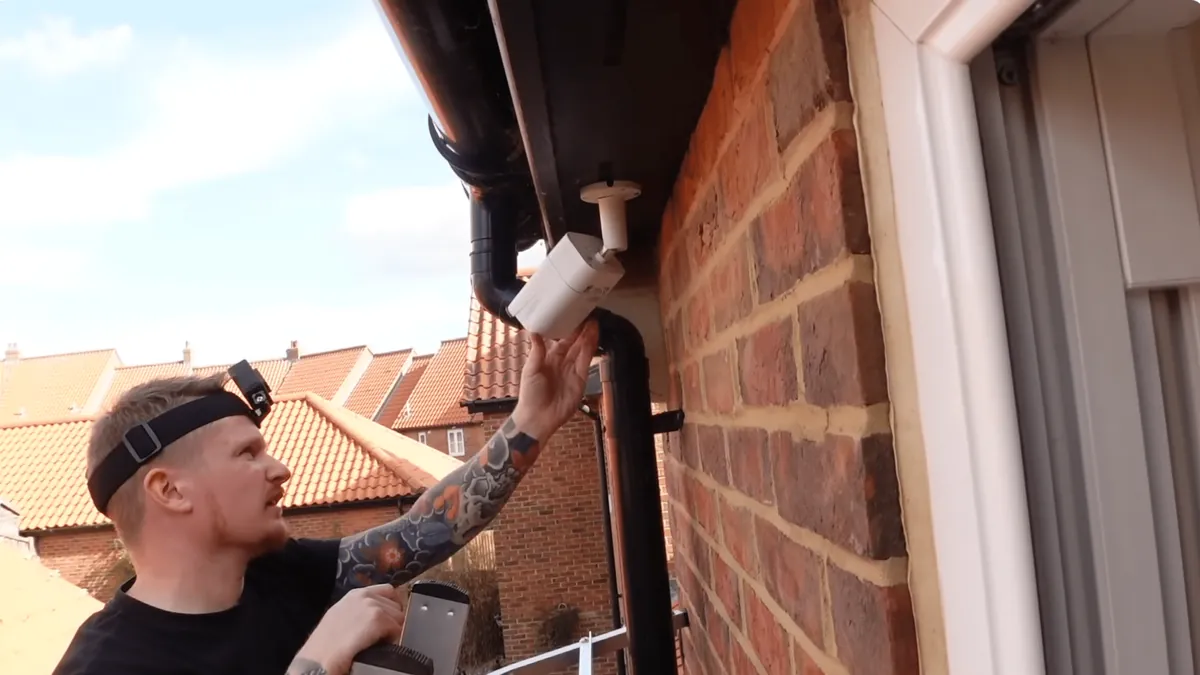
Mount height of 3-6 meters is typical for outdoor PTZ; anything higher starts to defeat face identification at ground level. The critical number is swing clearance: the head needs its full tilt arc and pan circle unobstructed, so mount it on a pole adapter or wall bracket with 20-30cm of standoff, not flush against a wall. The pan tilt zoom camera mount is a real product category for a reason — a proper mount with a junction box keeps the cable entry sealed and the head clear. A pan tilt zoom mount on a pole gives the cleanest 360° coverage; on a wall, plan for the blind wedge behind the bracket.
2. Power and network
Outdoor PTZ draws 15-25W with the heater and wiper active, so plan PoE+ (802.3at, 25.5W) or a dedicated power run — standard PoE (802.3af, 15.4W) under-powers heater models and causes brownout reboots at night. Cat5e or Cat6 cable runs stay under 100 meters for PoE; beyond that, use a midspan injector or fiber with a media converter. On the network side, assign a static IP or DHCP reservation, open RTSP and ONVIF ports, and set strong credentials — PTZ cameras expose motor control, so a compromised camera is a camera someone else is driving.
3. First-day configuration checklist
- Level the image: adjust the mount so the horizon is flat at full zoom — off-level mounts amplify at telephoto.
- Set the home position to the most important permanent view (gate, entrance, main aisle).
- Program presets at the zoom level each position needs: wide for patrol, telephoto for the cash office window.
- Define 2-4 patrol patterns chaining presets with 8-15 second dwell times.
- Schedule auto cruise: 24/7 or after-hours, with motion-triggered preset recall enabled.
- Test remote control from the NVR, app and (if used) joystick — confirm ONVIF PTZ commands work, not just video.
- Verify at night: check low-light zoom quality at max focal length, and confirm the IR or full-color illumination actually covers the telephoto field.
One PTZ vs Multiple Fixed Cameras: The Real Cost
The "one PTZ or four fixed cameras" question is a math problem, not a preference. The table below compares a single 25x outdoor PTZ against four fixed 4MP cameras on a typical warehouse or yard, using wholesale-level hardware pricing.
| Cost factor | 1× PTZ (25x, IP66) | 4× fixed 4MP cameras |
|---|---|---|
| Hardware (wholesale) | $120-250 | 4 × $25-50 = $100-200 |
| Cable runs / install | 1 run, 1 mount | 4 runs, 4 mounts |
| Coverage | 360° on patrol, zoom to detail | 4 fixed zones, always on |
| Simultaneous view | 1 direction at a time | 4 directions at all times |
| Detail at 50m | Face / plate readable (20x+ zoom) | Person-shaped blur |
| Storage & bandwidth | 1 stream (2-4 Mbps H.265) | 4 streams (8-16 Mbps total) |
| Moving parts risk | Motors, gears, seals wear | Static — very long life |
| Best for | Open areas, patrol coverage, events | Chokepoints, tills, doors, evidence |
1. Where the PTZ wins the math
For open spaces — yards, parking lots, fields, warehouse floors — one PTZ beats four fixed cameras on both capex and opex: fewer cable runs, one stream to record instead of four, and zoom detail no fixed lens can match. The ptz camera price at wholesale ($120-250 for a 20x-25x IP66 unit) plus one install visit routinely undercuts four fixed cameras plus four mounts plus four runs plus four channels of storage.
2. Where fixed cameras win
Fixed cameras win everywhere simultaneity is the job: tills, entrances, gates, corridors. A PTZ looking at the door while the register is robbed is a failed investment, and fixed cameras never miss because they are "on patrol elsewhere". They also win on reliability — no motors, gears or seals — and on storage efficiency per square meter covered. For evidence continuity, courts and insurers prefer uninterrupted fixed coverage of the incident area.
3. The hybrid pattern that actually works
The winning commercial pattern is fixed cameras for permanent coverage of chokepoints plus one PTZ for patrol and follow-up detail. A shop runs fixed domes at the door and till, and one PTZ on the floor that cruises and zooms when motion fires. A yard runs fixed bullets on the perimeter corners and one PTZ at the center pole. In hybrid layouts, link the fixed camera's motion event to the PTZ preset nearest that zone, so the PTZ swings to investigate the alarm — the standard "dome follows the alarm" integration in every half-decent NVR and VMS.
Applications: Where PTZ Wins
The commercial ptz camera buyer is almost always solving one of five coverage problems. Each maps to a different PTZ class and config.
Warehouses and logistics
A 20x-25x PTZ on a center column patrols racking aisles and docks; preset recall on door sensors swings it to the loading bay in under 2 seconds. Pair with fixed cameras at the gates for plate capture, and record the PTZ main stream to an NVR at 2-4 Mbps H.265.
Parking lots and yards
360° continuous pan on a pole mount, patrolling 6-8 presets after hours. This is the classic "outdoor ptz surveillance cameras" deployment: one head per 80-150 parking spaces, zooming into plate range on demand.
Farms, ranches and rural sites
Solar and 4G PTZ units cover paddocks and equipment yards with no grid power — the "camara ptz panel solar" class in Spanish-speaking markets. Data plans are the constraint: budget 2-4 Mbps sustained and record events, not continuous footage.
Construction sites
IP66 PTZ on a tower or pole monitors equipment and material staging across a site that reshapes weekly. Repositioning presets after each site change is part of the maintenance contract, and battery/solar units survive power cuts on unserviced sites.
Retail and loss prevention
One PTZ per floor, cruising on schedule, zooming on motion events from the fixed dome network. The security camera ptz outdoor variant guards the parking side; indoor mini PTZ units handle the sales floor. Both feed the same NVR timeline, so an investigator jumps from dome event to PTZ zoomed view in one click.
Wholesale and Bulk Sourcing
The "ptz camera manufacturers" search leads to a crowded field: global brands, regional distributors and factory-direct suppliers. For B2B buyers the economics mirror every other CCTV category — factory-direct wholesale beats retail by 30-50% on comparable hardware, with the tradeoffs of minimum order quantities, lead time and your own testing discipline.
1. What to ask a manufacturer
- Optical zoom: confirm it is optical, not "total zoom" — 20x minimum for outdoor, 25x-36x for distance work
- Pan/tilt: 355° vs 360° continuous, tilt range, auto-flip, preset speed
- Presets and patrols: count (128-512 presets, 1-8 patterns) and scheduling capability
- Weather: IP66/IP67, operating temperature with heater, wiper option, 6KV surge
- Power: PoE+ (802.3at) or external power; watts with heater active
- Interop: ONVIF Profile S with PTZ commands, RTSP, SDK/HTTP API for integration
- Compliance: NDAA compliant ptz cameras availability, certifications (CE, FCC, RoHS), test reports
- Commercial terms: MOQ (typically 10-50 units), lead time (15-30 days), 2-year warranty, RMA process, firmware update policy
2. Price bands at volume
Wholesale pricing for a 20x optical, 2MP, IP66 outdoor PTZ runs roughly $80-150 per unit at 50+ quantities; 4MP with 25x-36x zoom and heater lands at $150-300; 4K PTZ with advanced features (auto-tracking, 512 presets, NDAA-compliant build) reaches $300-500. Compare that with retail ptz camera price tags of $200-800 for the same classes, and the wholesale path pays for the container before it docks.
3. Sample testing before the MOQ
Never commit to a pallet on a spec sheet. Order 2-3 samples and run a fixed test protocol: zoom through the full range and check focus tracking at telephoto; program and recall 20 presets, measuring return accuracy; run a 48-hour patrol loop and watch for drift; soak the housing (or run a water-spray test) and check the seals; confirm ONVIF PTZ control from your NVR and app; and record night footage at max zoom. A supplier who pushes back on samples is a supplier you do not want at MOQ scale.
The Bottom Line
A PTZ camera is the highest-leverage single device in a security system — one motorized head replaces a wall of fixed cameras for coverage, and one zoomed preset can capture the evidence that settles an incident. The buying decision comes down to six numbers: optical zoom (20x floor outdoors), pan range (360° continuous for patrols), preset count (256+ for serious sites), IP rating (IP66 minimum), PoE+ power budget (25.5W with heater), and wholesale price per unit at your volume. Match those to the site, pair the PTZ with fixed cameras at the chokepoints, schedule the patrols properly, and the system covers everything all the time — which is exactly what a pan tilt zoom camera is for. When you are ready to spec, the FULLCOLORCAM PTZ line ships IP66 outdoor units with 20x-25x optical zoom, ONVIF Profile S, presets and auto cruise — and our team answers the firmware and warranty questions before you order, not after. See the PTZ camera range for factory-direct pricing.
NEXT STEP
Ready to Upgrade to Full-Color Night Vision?
Send us your requirements — our team responds within 24 hours with pricing and lead time.
Written by
Ray ChanCCTV Buyer's Guide Author · Full-Color Night Vision Specialist. Ray helps global importers and integrators source factory-direct security cameras.